How to Hire a Handyman: What to Check First
How to hire a handyman: what the work covers, when your state wants a licensed trade, the insurance to ask for, and how to agree a price before it starts.
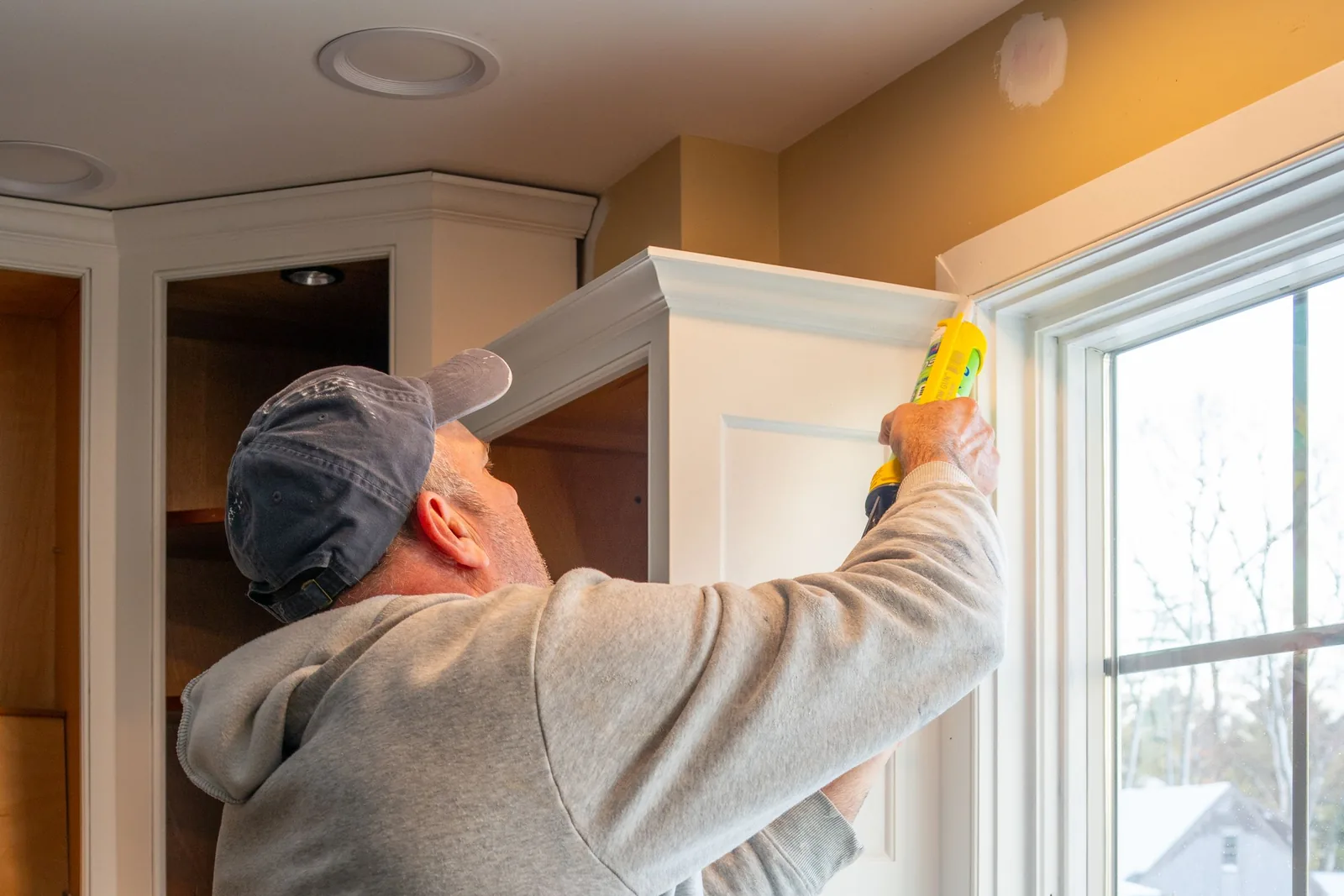
A drawer that sticks, a door that will not latch, a dripping shower head, and two shelves that never went up. None of it is an emergency, and none of it is worth calling out a specialist trade. That is handyman work, and knowing how to hire a handyman is mostly about being clear: about the tasks, about the price, and about the point where a small job stops being handyman work at all.
Ready to book one? Post your handyman job free, or for small tasks like mounting a TV, post an odd job, and compare the verified local people who reply.
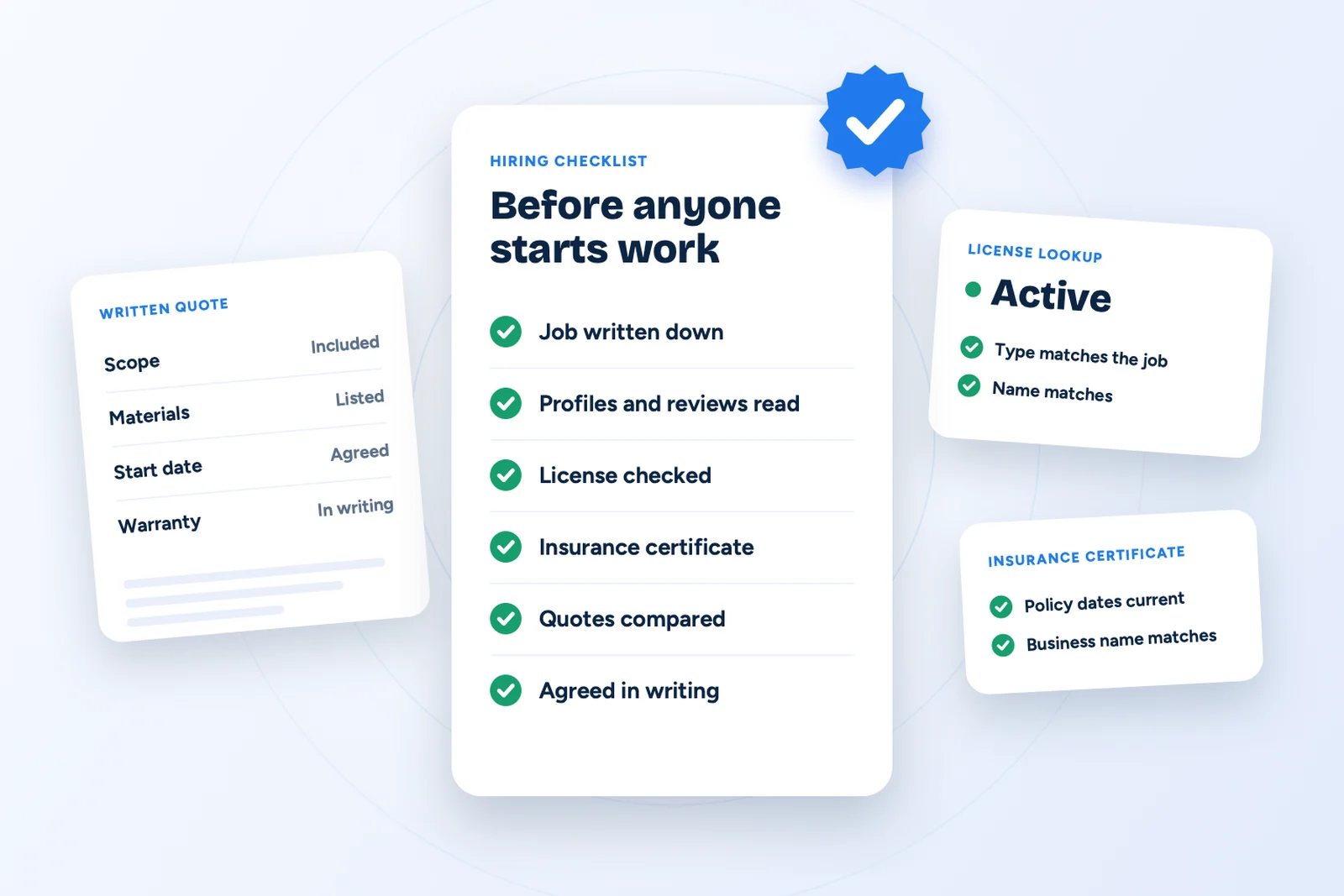
The process itself is short. Write down every task, find someone who covers your area and takes that kind of work, check what your state or country expects them to be licensed for, agree the price in writing, and keep the paperwork. This guide goes through each step in the order you will need it, and the same steps for bigger jobs and licensed trades are in how to hire a local contractor.
What a handyman actually does
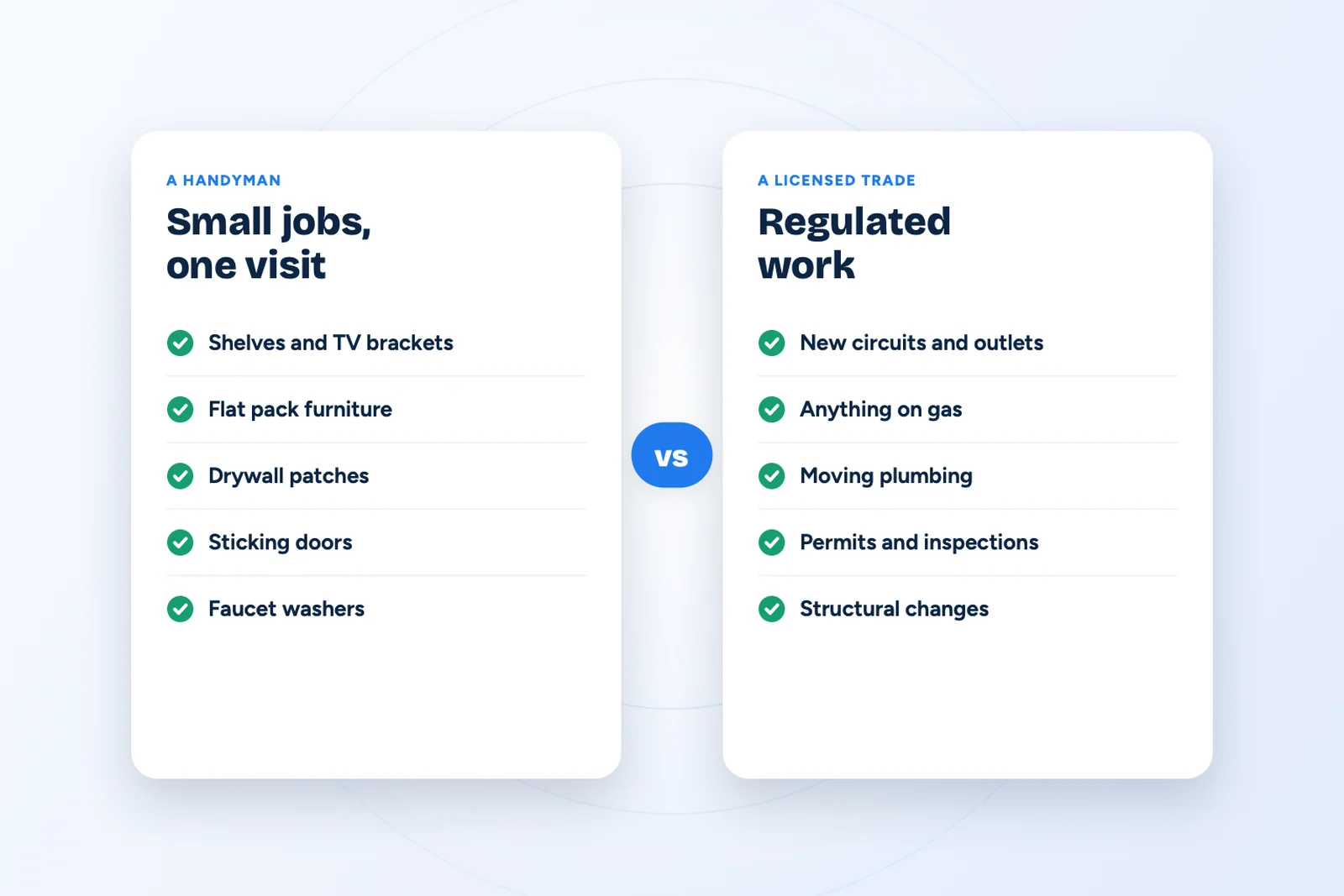
A handyman is a generalist. The usual list covers mounting a TV, assembling flat pack furniture, patching and painting drywall, re-hanging a door, fixing a running toilet, swapping a faucet, sealing a bath, putting up shelves and blinds, weather stripping, clearing gutters, and small tile or fence repairs. The work is broad and shallow on purpose, and the real value is getting eight small jobs done in one visit instead of eight phone calls. For a fuller list, see the jobs a handyman takes on.
The line sits where a job becomes regulated or structural. Moving a wall, running new circuits, replacing a panel, re-piping, gas appliances, roofing, and anything needing a permit belong to licensed trades. So does work that has to pass inspection. A handyman who says a job is past their line is showing judgment, not turning down your money. For where that line falls, see when you need a licensed contractor instead.
A faucet washer is handyman work. A new gas line is not, whatever anyone tells you on the phone.
Write the task list before you call
Walk the house once with your phone and write down every job, however small. Photograph each one, measure anything that needs a part, and note the model number on appliances and fixtures. A handyman quoting from a clear list quotes accurately, and the visit takes less time because nobody is diagnosing on the doorstep.
Decide who buys materials. If they shop for you, expect the time and the trip to be part of the bill, and ask whether materials carry a markup. If you buy, buy exactly what the job needs, because the wrong size bracket turns a ten minute task into a second visit.
Group your tasks into one visit. Most handymen have a minimum charge or a call out fee that covers travel, tools and setup, so a single two hour visit almost always beats two separate one hour ones. Mention parking, stairs, pets and access now, because all of them change how long a day takes.
How to hire a handyman in five steps
Once the list exists, the rest runs in an afternoon:
- Send the same task list, with photos, to two or three handymen so the quotes compare like for like
- Check whether any task on the list needs a licensed trade where you live, and take it off the handyman list if it does
- Ask each one for proof of insurance, and for a license number if the work calls for one
- Compare the quotes on scope and availability, not on the bottom number alone
- Agree the scope, the price or the rate, and the timing in writing before anyone starts
If you would rather not chase quotes, post the job with your task list, your city and a few photos, and let the replies come to you. The list you already wrote is most of how to describe the job. On Taskovery only contractors whose checks have passed can answer a posted job, posting costs you nothing, and you choose who to hire.
Check the license rules where you live
Most states have no handyman license as such. What they usually have is a dollar limit: below it, small repair work can be done without a contractor license, and above it, a license is required. The limits vary widely, and they count labor and materials together.
California raised its limit to $1,000 in 2025, and the exemption falls away entirely if the job needs a permit, if the worker hires help, or if the task is one piece of a larger project. Florida leaves minor non structural repairs alone but is strict about the trades, so electrical and plumbing work needs the licensed professional whatever it costs. Texas has no statewide handyman license at all and leaves the rules to cities and counties. Your own state is a two minute search away, and its licensing board publishes the answer.
Outside the US the rules are set nationally or by the province or state, and they bite hardest on the trades a handyman should not touch anyway. Gas work needs a registered or licensed gasfitter in Canada, the UK, Ireland, Australia and New Zealand, and electrical work is licensed or closely controlled in all five. Where to check a license in each country is in our hiring guide.
When a job does need a license, get the number and the exact name it is issued to, then look it up on the official register, which in the US is the state board's website. Check that it is active, that the license type matches your work, and that the name matches the person or business you are about to pay. On Taskovery a trade license is a separate, optional check with its own badge, so read what the tick covers rather than assuming it includes one.
Ask for insurance, and read the certificate
General liability insurance is the one that matters most to you, because it responds to damage done to your property while the work is going on. If the handyman brings anyone with them, workers' compensation matters too, since an injury at your house otherwise has nowhere to go.
“Fully insured” on a website is not evidence. Ask for a certificate of insurance and read three things on it: the policy dates, the business name, and the type of coverage. Apartment buildings and HOAs often require a certificate that names the building before anyone is allowed to work, so ask your building early rather than on the morning. If anything looks odd, ring the agent listed on it. Here is how to read the insurance certificate in full.
How handymen charge, and what moves the price
There are three common structures. Hourly, usually with a minimum of an hour or two, suits a mixed list of small tasks. A flat price per task suits jobs everyone can picture, like hanging a TV or fitting a screen door. A day rate suits a long list, and it is often the best value if you have saved jobs up.
What handymen charge in 2026, by country
| Country | What published price guides say | Source |
|---|---|---|
| United States | $50 to $80 an hour for a self-employed handyman, $75 to $125 an hour for a company, plus materials | HomeGuide, 2026 |
| Canada | CA$85 to CA$110 an hour on average, with some charging up to CA$175 | HomeStars, updated August 2026 |
| United Kingdom | About £30 an hour on average, about £50 in London and other major cities | Checkatrade, June 2026 |
| Australia | A$40 to A$80 an hour for basic work, and A$180 to A$280 for an average completed task | Service.com.au; Airtasker, June 2026 |
| New Zealand | NZ$100 to NZ$300 a task in Auckland, median NZ$150, from a small sample of jobs | Airtasker NZ |
| Ireland | We have not found a reliable published national figure. Ask two or three handymen to price the same written list | — |
These are published averages, checked in October 2026. They leave out materials, and the city, how urgent the job is and how easy it is to get to move the number more than anything else. Use them to sense-check a quote, not to argue a fair one down.
What moves the price is rarely the work itself. Travel, parking, waiting for access, a supply run, disposal of the old unit, and the discovery that the wall is plaster and not drywall all cost time. Ask what happens if a task turns out bigger than it looked, and agree that anything beyond the list gets priced before it starts. That one sentence prevents most billing arguments.
The cheapest quote is not automatically the best. Read what each one includes: the same tasks, the same materials, the same cleanup. A number far below the rest usually means a shorter list.
What to agree before work starts
Put the details in a message or an email so both of you can read them back later: the task list, the price or the rate with the minimum, who buys materials, the start time and expected finish, who takes the rubbish away, and when payment is due. Ask who will actually turn up, because the person quoting is not always the person working.
On Taskovery the price a contractor quotes is the price you pay them. They invoice you directly and Taskovery is not part of the payment, so agree the payment terms before the first screw comes out. After the job is finished, a review you write goes up on their profile, and reviews come only from jobs that were actually hired and completed. For a fuller set, see these questions to ask a contractor.
Red flags, and what to do if it goes wrong
Slow down if someone wants a large cash payment up front for a small job, refuses to put the scope or the price in writing, will not give a license number for work that clearly needs one, or presses you to decide today. Be wary too of the knock at the door offering a deal because a crew is already working in the street.
Keep the estimate, the certificate of insurance, your messages and every receipt. If the work goes wrong and the conversation goes nowhere, two places outrank any platform: your state licensing board, which can act on a license, and your state attorney general's consumer protection office, which handles the rest. Elsewhere, the equivalents are the licensing body for the trade and your national or provincial consumer protection agency. All of them are free and none needs anyone's permission.
Questions people ask about hiring a handyman
How much does a handyman charge per hour?
It depends on the country and the city more than on the job. The table above has the published figures: in the United States roughly $50 to $125 an hour depending on whether you hire an individual or a company, in the United Kingdom about £30 an hour outside London. Most charge a minimum of an hour or two, so a single five-minute job costs the same as several small ones done together.
Is it cheaper to pay by the hour or by the job?
Hourly suits a mixed list where nobody knows how long each task will take. A fixed price suits a job everyone can picture, like mounting a television. For a long list, ask about a half-day or day rate, which is usually the best value per task.
Should I pay a handyman upfront?
Paying for materials in advance on a bigger job is normal. Paying for the whole job before any work is done is not, and it is one of the warning signs worth checking before you agree to anything. Pay the balance when the list is done and you have looked at it.
Do I need a licensed handyman?
For the small jobs a handyman does, usually not. Electrical, gas and most plumbing work is different in every one of the six countries Taskovery covers, and that work needs a licensed or registered trade. The license section above explains where the line sits and how to check.
Hiring a handyman well comes down to a written list, a checked license where one is needed, proof of insurance, and a price both of you agreed before the work started. Get those four right and the rest is just a good morning's work.
Need this done?
Describe the job once and contractors near you get in touch. It costs you nothing.