How to Post a Home Repair Job and Get Replies
Learn how to post a home repair job with clear details, useful photos, and the right trade, so you can compare local contractor responses with confidence.

A leaking pipe under the sink is not the time for a vague request that says, “Need a plumber ASAP.” When you post a home repair job, the details you include determine who responds, what questions they need answered, and how quickly you can decide who to contact. A clear post protects your time and helps contractors understand whether the work fits their trade, service area, and schedule.
You do not need to diagnose the problem perfectly. You do need to describe what you can see, hear, smell, or experience. Start there. A qualified professional can inspect the issue and explain the repair options before setting a final price.
Start with the problem, not the solution
Homeowners often write a job post around the repair they think they need: “Replace water heater,” “Fix electrical panel,” or “Repair roof.” That can be accurate, but it can also narrow the conversation too early. The visible symptom is usually more useful.
For example, say that the water heater is leaking from the bottom, there is no hot water, or the pilot light will not stay on. For an electrical concern, describe which outlets or lights are affected, whether a breaker trips, and whether there is burning smell, heat, sparking, or smoke. If you notice active sparking, smoke, a gas odor, major flooding, or another immediate safety risk, prioritize emergency services or the relevant utility before posting.
A good repair post gives a contractor enough context to recognize the kind of work involved without asking you to act as the expert. State what happened, when it started, how the issue affects the home, and whether it has gotten worse.
Choose the closest trade for your home repair job
The right category gets your request in front of professionals who handle that type of work. It also prevents wasted replies from people who are not equipped for the job.
Plumbing fits leaks, drain problems, toilet repairs, water heaters, and fixture issues. Electrical work fits outlets, switches, wiring concerns, breaker issues, and lighting installation. Appliance repair is the better choice when the problem is limited to a refrigerator, washer, dryer, dishwasher, oven, or similar household appliance. Handyman work can make sense for smaller, non-specialty repairs such as door hardware, drywall patches, shelving, trim, or minor adjustments.
Some jobs cross trades. A bathroom refresh might involve plumbing, electrical, painting, and construction work. In that case, post the immediate need first or explain the full scope and ask whether the contractor handles that portion of the project. Do not assume one professional will perform every specialized task. Ask what they take on directly and what may require another trade.
Be specific about the property
Contractors need to know the working conditions, not just the damaged item. Include whether the property is a house, condo, apartment, rental, or commercial space. Mention the floor where the work is located, stair access, parking limits, gate codes, pets, and any building rules that affect arrival or work hours.
For a rental, be clear about your authority to approve repairs. Some repairs require owner or property manager approval. Sorting that out before a visit can prevent a contractor from arriving only to find that no one can authorize the work.
Add photos that answer basic questions
Photos reduce back-and-forth. They are especially helpful for visible damage, parts that need replacing, access conditions, and the overall scale of the work.
Take a wide photo to show where the issue is located, then take closer photos of the damaged area. If there is a model number on an appliance or water heater, include a readable photo of that label. For a fence, deck, wall, or ceiling issue, capture enough surrounding area to show the size and location of the problem.
Avoid sharing sensitive information in photos. Cover house numbers, alarm panels, personal documents, keys, and any details that do not help explain the repair. For interior jobs, a quick clear photo is better than a heavily edited image. Contractors need an honest view of the condition they may be asked to inspect.
State your timing honestly
“ASAP” can mean today, this week, or before a move-out date. Say which one you mean. If the repair must happen before tenants arrive, an inspection, a delivery, or a family event, include the deadline. If you are flexible, say that too.
Availability matters just as much. Provide a few windows when someone can be present, especially if the contractor needs access inside the home. If you can only meet after work or on weekends, make that clear in the post. A contractor may be able to do the work but not within the hours you need.
Urgency should reflect the real situation. An active leak, no heat in cold weather, or a failed refrigerator with food at risk may need prompt attention. A loose cabinet handle or small drywall ding is usually a scheduled repair. Clear timing helps professionals prioritize appropriately and helps you avoid paying attention to replies that cannot meet your needs.
Say what you want from the first response
You can make the next step easier by asking for the information you actually need. For a small, well-defined repair, you may want to know whether the contractor is available, whether they need more photos, and how they approach the job. For a larger or uncertain issue, ask whether an on-site inspection is needed before they can provide a price.
Be careful with requests for an exact quote from a short description. Some work can be priced from photos and measurements. Many repairs cannot. Hidden water damage, wiring conditions, parts availability, and access problems may only become clear after inspection. A contractor who explains that limit is giving you useful information, not avoiding the question.
You can also state whether you already have materials or want the contractor to supply them. This affects the conversation because parts, product choices, pickup time, and manufacturer requirements can all change the scope.
Review replies like a hiring decision
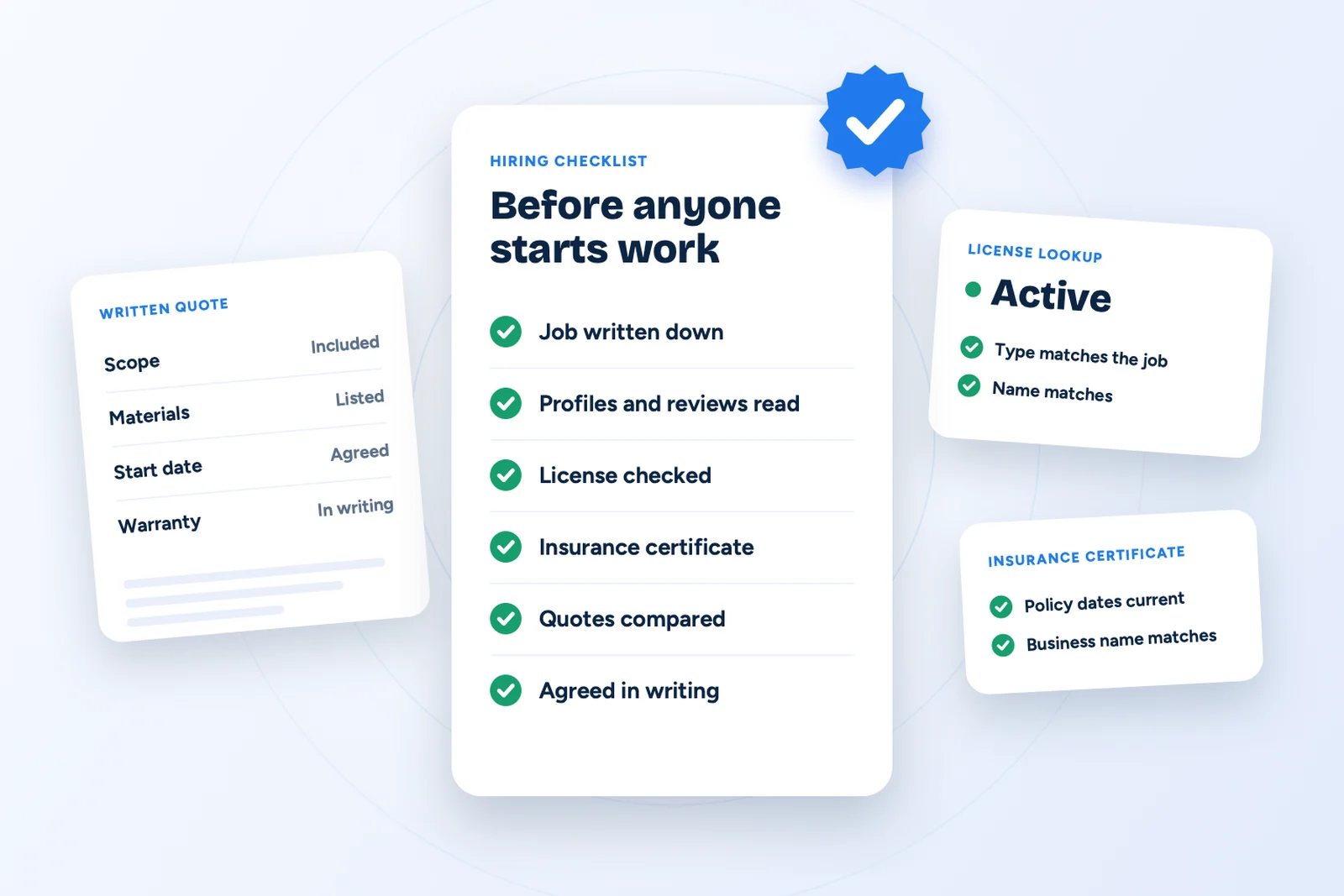
Fast is useful. Clear is better. Once contractors respond, look beyond the first message and review the available profile information. Look for relevant trade experience, completed-job history, work photos, customer reviews, service area, and any license a contractor has chosen to add.
Then contact the people who appear suited to the job. Ask direct questions: Have you handled this type of repair before? Do you need to inspect it first? What is included in your estimate? Who will perform the work? What is your earliest available appointment?
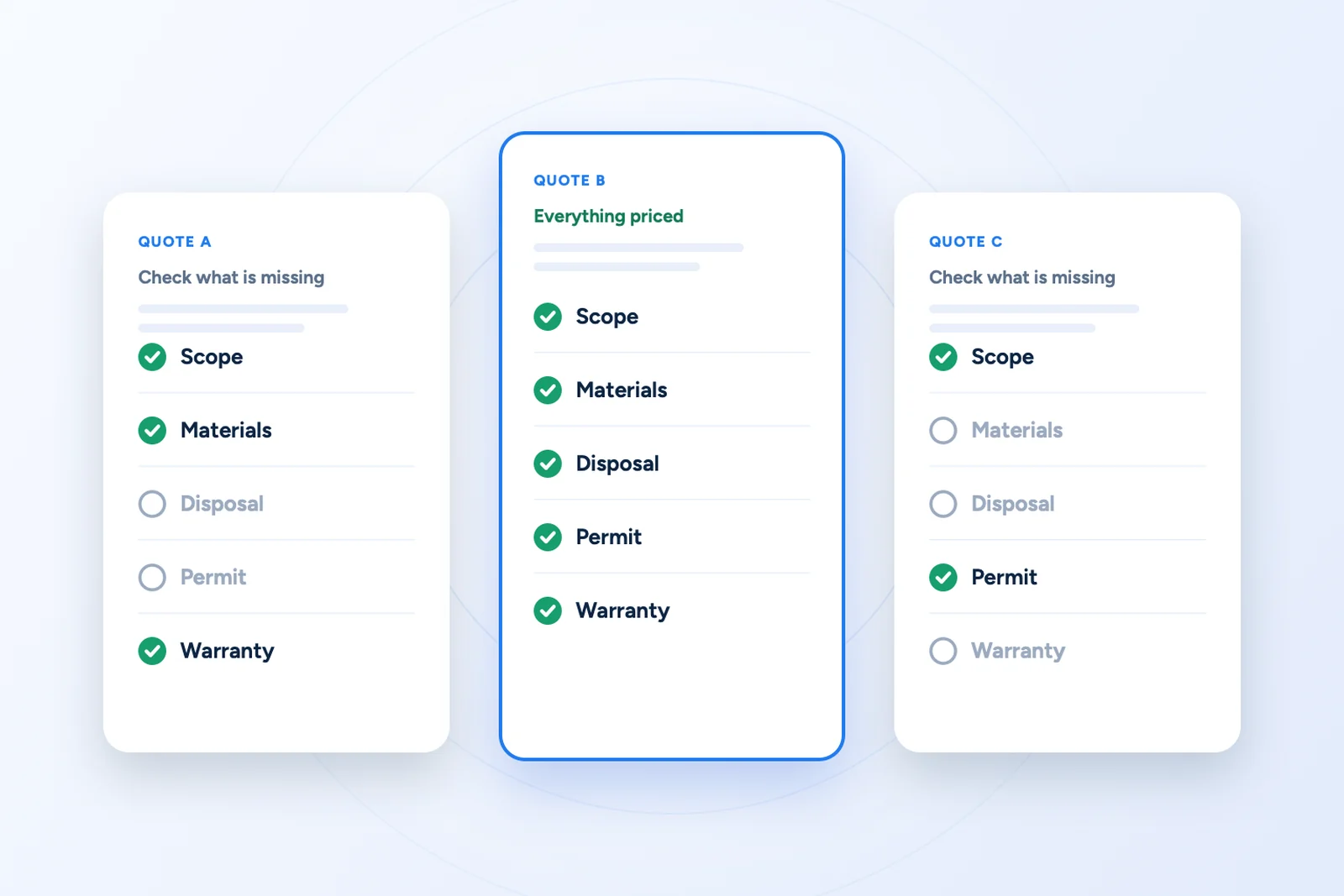
A low number without context is not automatically a better deal. Neither is a higher number automatically a sign of better work. Compare what each contractor says they will inspect, repair, replace, supply, and clean up. Make sure you are comparing the same scope.
With Taskovery, customers can post the job for review, then choose from qualified contractor responses or contact a contractor directly. You can view profiles and communicate with the professional before hiring. The contractor sets their own price after understanding the work, and you pay the contractor directly. There is no customer service surcharge and no platform payment process for the repair.
Use a simple job-post structure
A strong post can be short. It should still answer the questions that determine whether a contractor can respond productively:
- What is wrong, and when did it begin?
- Where is the issue located?
- What type of property is it, and are there access limits?
- What photos or model details can you provide?
- When do you need the work done, and when can someone provide access?
Here is the difference in practice. “Need someone to fix my dishwasher” leaves too much open. “Dishwasher fills with water but stops before the wash cycle. No visible leak. It is in a first-floor kitchen, and I can provide the model number and photos. Available Tuesday or Thursday after 3 p.m.” gives an appliance repair professional a useful starting point.
Keep control of the final choice
Posting a job is not a commitment to hire the first person who replies. It is a way to start informed conversations with professionals who want the work. Ask questions, compare the scope, and choose the contractor you are comfortable inviting into your home.
The best job post does not try to solve the repair from your phone. It gives the right professional a clear picture of the problem, your property, and your timeline - then leaves room for an honest inspection and a direct decision.
Need this done?
Describe the job once and contractors near you get in touch. It costs you nothing.