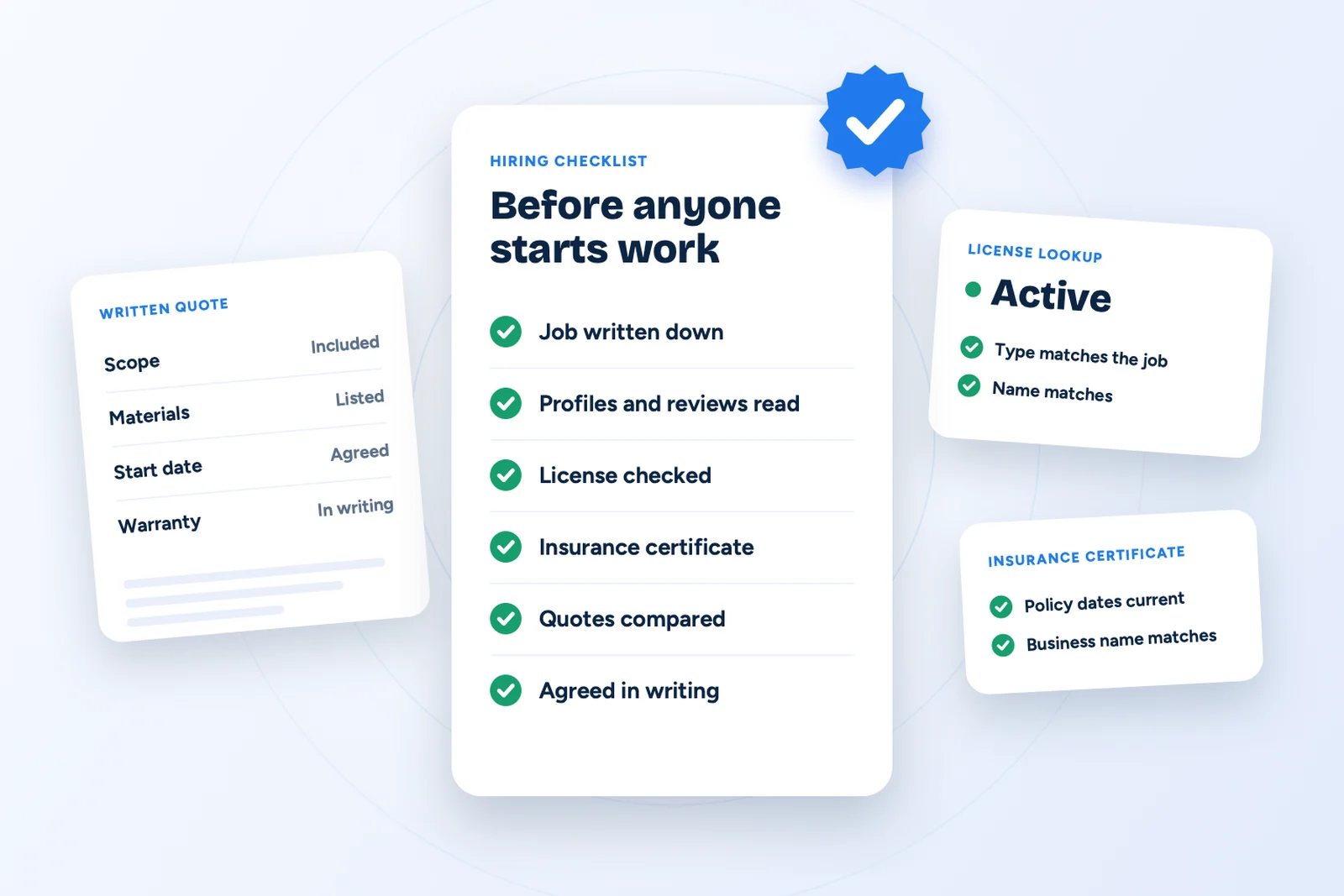
How to Compare Contractor Quotes: A Line-by-Line Checklist
How to compare contractor quotes: get like-for-like prices, read what each includes, spot what is missing, and choose on more than the lowest number.
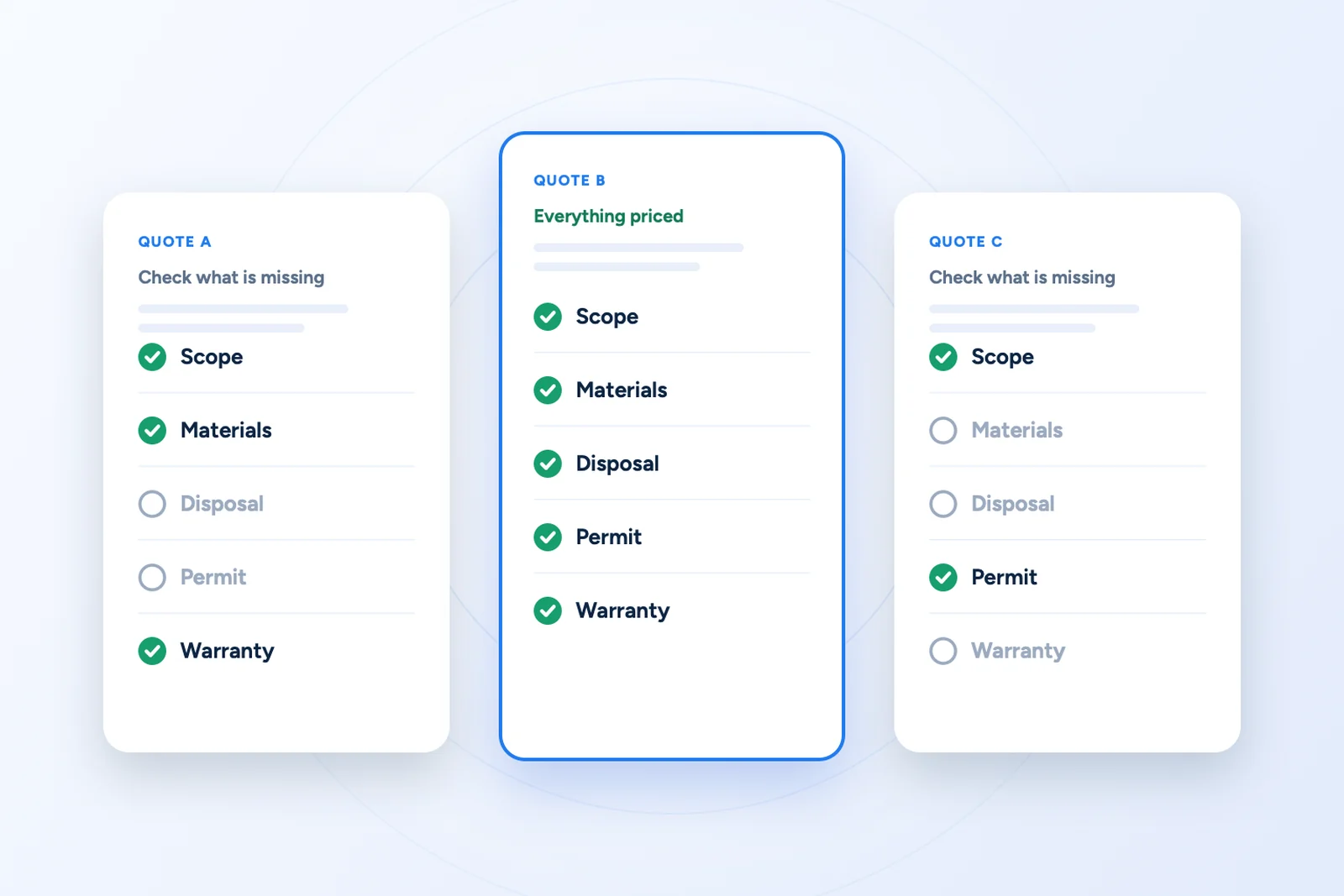
Three quotes arrive for the same job and the totals are nowhere near each other. One is half the price of another, one is a single line, and one runs to two pages. Knowing how to compare contractor quotes is mostly making sure they describe the same job, so that the difference in price means something.
To get replies you can compare in the first place, post your job free on Taskovery: verified local contractors reply, and you agree the price before anyone starts.
This guide covers the difference between a quote and an estimate, how to ask for prices that can be compared, what a good quote includes, and how to choose when the numbers and the people point different ways. It sits in the middle of hiring a contractor, start to finish: after you have a shortlist, and before anyone starts work.
Quote, estimate or ballpark
The words are used loosely, so ask which one you are getting. A quote is usually a fixed price for a defined job: if the scope does not change, the price does not either. An estimate is an educated guess, and the final bill can move with what the contractor finds. A ballpark is a range given before anyone has seen the job, useful for budgeting and nothing else.
In the UK, Ireland, Australia and New Zealand the difference is widely understood, and a written quote is generally treated as a fixed price. In the US and Canada the terms blur, so ask directly whether the number is fixed, and put the answer in writing.
Ask for quotes that can be compared
Send every contractor exactly the same description, the same photographs and measurements, and the same dates. Say what you want included, such as removing the old fixture, disposal, making good the wall, and cleanup, rather than leaving each person to guess. If you have chosen materials or a model, name them.
Ask for the quote in writing, broken into parts where the job allows it: labor, materials, other costs such as permits or disposal, and the total, with any taxes shown. A single number on a text message is hard to compare and harder to hold anyone to.
Two or three quotes are usually enough. Past that, the time you spend comparing tends to cost more than the difference you find, and good contractors are less keen to quote when they know they are one of eight.
What a good quote includes
A quote you can rely on names the business and its contact details, describes the work in enough detail that someone else could price it, lists the main materials, and says what is not included. It gives the price and whether it is fixed, the start date and how long the work should take, the payment terms, and the warranty on labor and materials. For licensed work it should carry the license or registration number.
The exclusions matter as much as the inclusions. "Excludes making good" means you will be left with a hole to patch. "Excludes disposal" means the old unit stays in your garage. Neither is wrong, but a quote that leaves them out can look cheaper than one that includes them.
How to compare contractor quotes line by line
Put the quotes side by side and go through them one item at a time: the scope, the materials and their quality, the extras, the timeline, the warranty and the payment schedule. Mark anything one quote includes that another does not, and ask the others to price it or confirm that it is included.
Once every quote covers the same job, the totals become comparable. It is common for the gap to shrink sharply at this stage, because the cheapest quote was cheapest mostly for what it left out.
Look at the materials, too. A named brand and model can be checked. "Standard fittings" can mean anything. If one contractor has specified better materials, that may be the whole difference in price, and worth paying for.
When the cheapest quote costs the most
A price far below the others usually means a smaller scope, cheaper materials, no permit, no insurance, or a plan to make it up later with extras. None of that is certain, and some contractors are simply efficient or quiet this month. But the lowest number deserves the most questions, and quotes that are red flags share a few patterns worth knowing.
The highest quote is not automatically the best either. Ask what it includes that the others do not. Sometimes it is the only one that priced the job properly. Sometimes the contractor did not want the job and priced it accordingly.
Timeline, availability and who does the work
Price is only one line. A quote that starts next week and one that starts in two months are not the same offer, especially if the job is a leak or a broken appliance. Compare the start date, how long each contractor expects the job to take, and whether they will be on your job every day or fitting it around others.
Ask who will actually do the work. Some contractors quote and supervise while a crew or a subcontractor does the job. That is normal on bigger projects, but you want to know who will be in your home, whether they are covered by the same insurance, and who to call when something needs deciding.
Before you choose, run each quote through the same short list:
- The business name, contact details and, for licensed work, a license number
- A description detailed enough that someone else could price it
- Materials named by brand or standard, not "as required"
- What is excluded, in writing
- Whether the price is fixed, and how changes are priced
- The start date, the expected duration and the payment schedule
- The warranty on labor and on materials
Questions to ask about a quote
Is the price fixed, and what would change it? What happens if you find something unexpected, and how will extra work be priced and agreed? Who will actually do the work, and will anyone subcontract part of it? Does the price include the permit, and who applies for it? What does the warranty cover, and for how long? When is payment due, and how?
The answers are part of the quote. A contractor who answers plainly, and puts the answers in writing, is showing you how the rest of the job will go.
Deposits and payment terms
A deposit should be reasonable and tied to something real, such as materials ordered for your job. Some US states cap how much a home improvement contractor can ask for up front. On bigger jobs, expect stage payments tied to finished work, with the final payment after the job is complete and you have checked it.
Be wary of a large deposit before any work or materials, a demand for cash only, or a discount for paying everything now. On Taskovery, the price a contractor quotes is the price you pay them, they invoice you directly, and Taskovery takes no part of the payment.
Making the decision
When two quotes are close, choose the contractor who explained the job best, answered your questions most clearly, and whose reviews describe work like yours. Communication before the job is the best guide you have to communication during it. If you shortlist from their profiles first, most of that is already done.
Tell the others you have chosen someone else. It takes a minute, it is good manners, and a contractor who was nearly right this time may be exactly right next time. And if you need somebody sooner than any of these quotes can manage, see finding someone fast without skipping the checks.
Need this done?
Describe the job once and contractors near you get in touch. It costs you nothing.