Contractor Red Flags: Warning Signs Before You Hire
Contractor red flags to spot before you hire: pressure to sign, cash up front, no paperwork, missing licenses, and what to do if you see one.
Most contractors are honest people doing difficult work. The few who are not tend to give themselves away early, in the first conversation, the quote, or the way they ask for money. Knowing the contractor red flags means you can spot them before a deposit changes hands, rather than after the job has gone wrong.
None of the signs below proves anything on its own. A good contractor can have a bad day or a clumsy website. A pattern of two or three is different, and worth walking away from. For the rest of the process, see hiring a contractor, start to finish.
Pressure to decide now
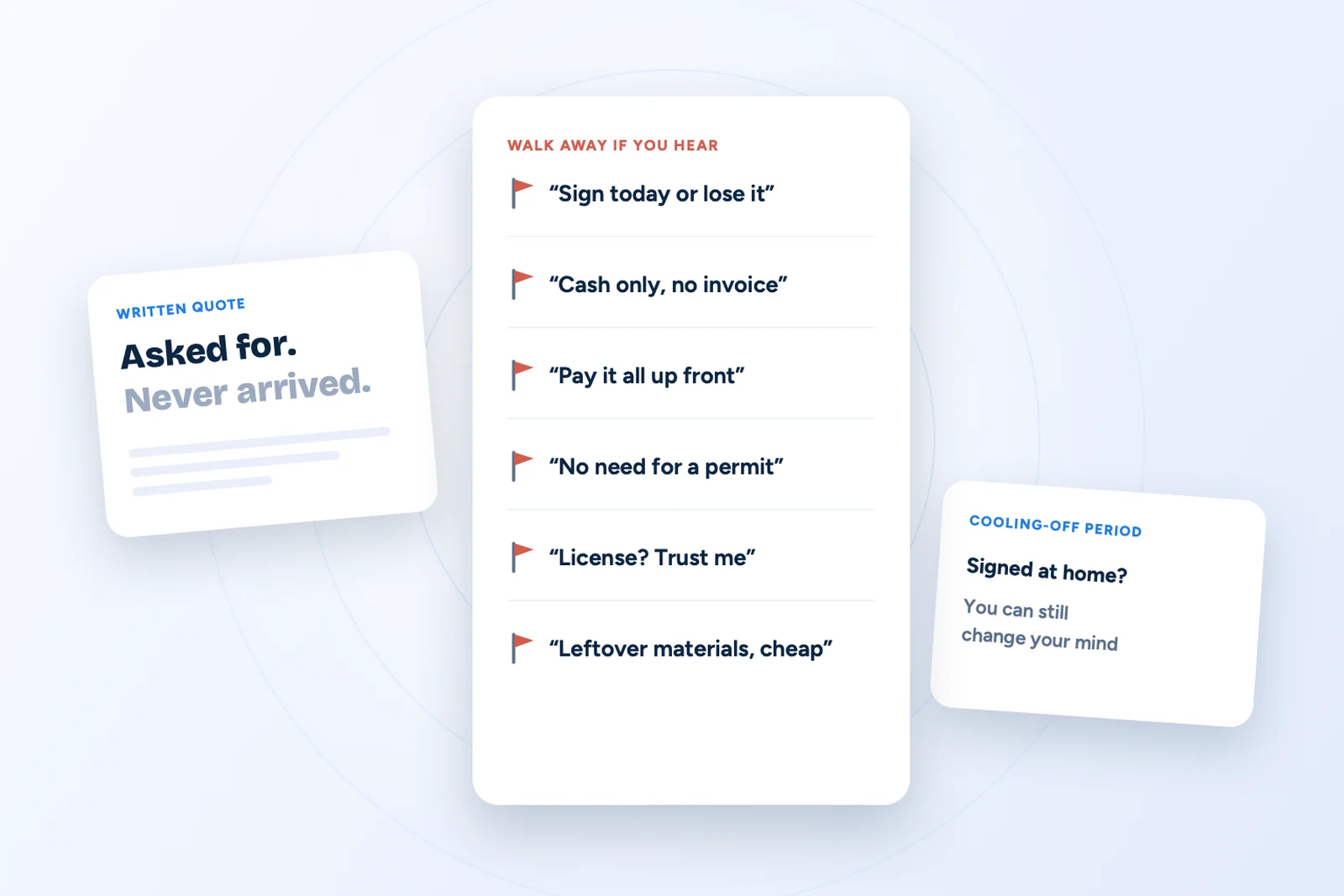
"This price is only good today." "I can fit you in tomorrow if you sign now." "Another customer wants this slot." Real contractors are busy, and slots do fill, but pressure to commit on the spot is the oldest sales tactic there is. It exists to stop you comparing quotes or checking a license.
A professional will give you a written quote and a sensible amount of time to decide. If the price disappears the moment you ask for a day to think, it was never a price, it was a tactic.
A knock on the door
Be wary of anyone who turns up unasked, especially after a storm, saying they noticed a problem with your roof or driveway, or that they have materials left over from a job down the street. Some are legitimate. Many are not, and the work is often rushed, overpriced or never finished.
The law gives you time to change your mind about a contract signed at home. In the US, the Federal Trade Commission's Cooling-Off Rule gives you three business days to cancel most sales of $25 or more made at your home. In Ontario, you have 10 days to cancel a direct agreement. In the UK and Ireland, most contracts agreed at your home carry a 14-day cancellation period. In Australia, unsolicited consumer agreements have a 10 business day cooling-off period, and in New Zealand uninvited direct sales have 5 working days. The rules in other provinces and states differ, so check yours, but no honest contractor needs you to sign on the doorstep.
Money up front, or cash only
A reasonable deposit for materials ordered for your job is normal. A large payment before any work or materials, a request to pay the whole job in advance, or a discount for cash with no invoice are not. Some US states cap how much a home improvement contractor can ask for up front, precisely because this is where customers lose money.
Pay in a way that leaves a record, against a written quote or invoice. On Taskovery, the price a contractor quotes is the price you pay them, directly, and nobody from Taskovery will ever ring, text or email asking for a payment or your card details.
No paperwork
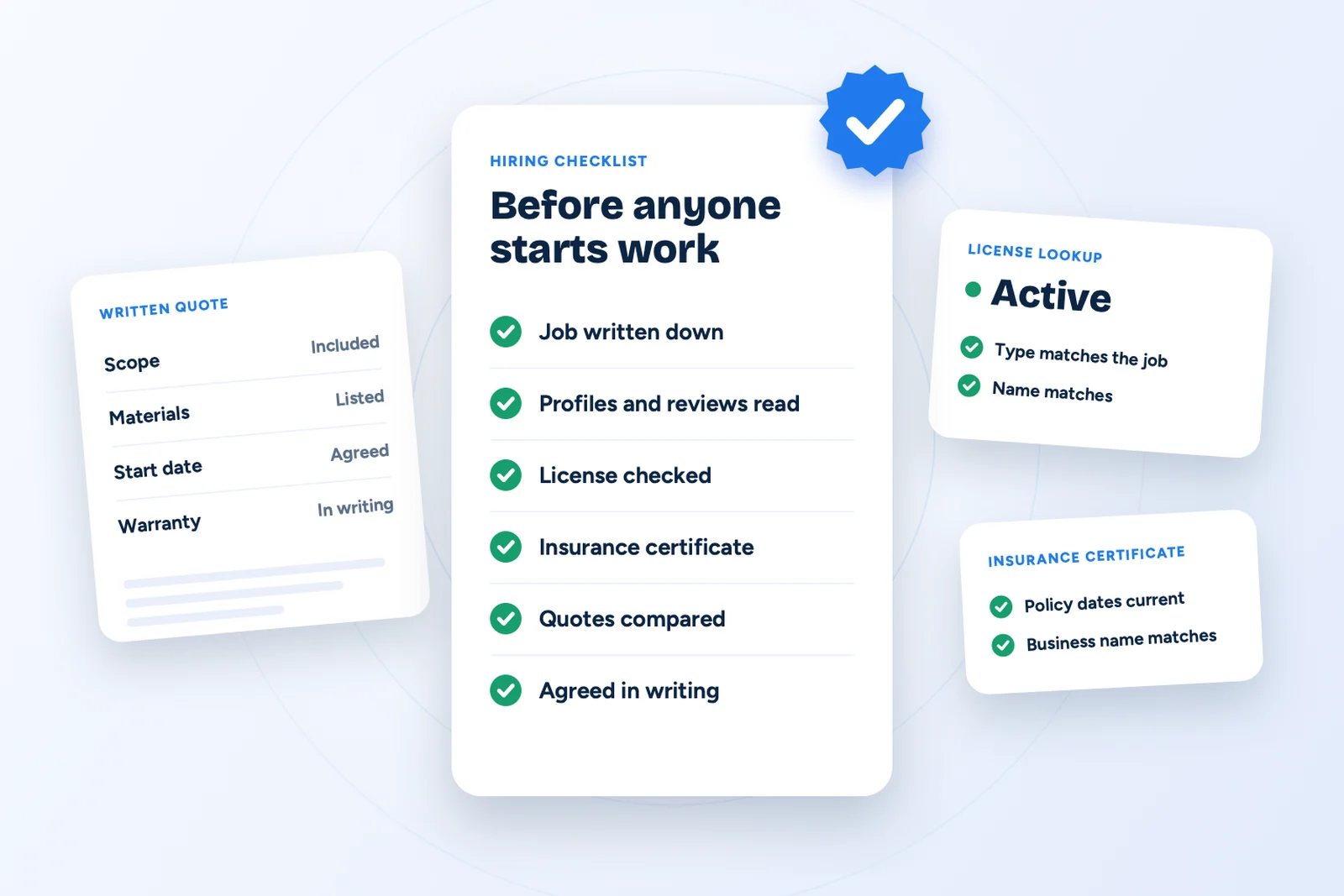
A contractor who will not put the scope or the price in writing, gives only a verbal figure, or sends a quote with no business name or contact details is keeping their options open, not yours. The same goes for anyone who is vague about who will actually do the work.
Written terms protect both sides. If they are missing, it is usually because someone does not want to be held to them. Ask once, clearly, and if the paperwork still does not appear, that is your answer.
License, insurance and permits that do not add up
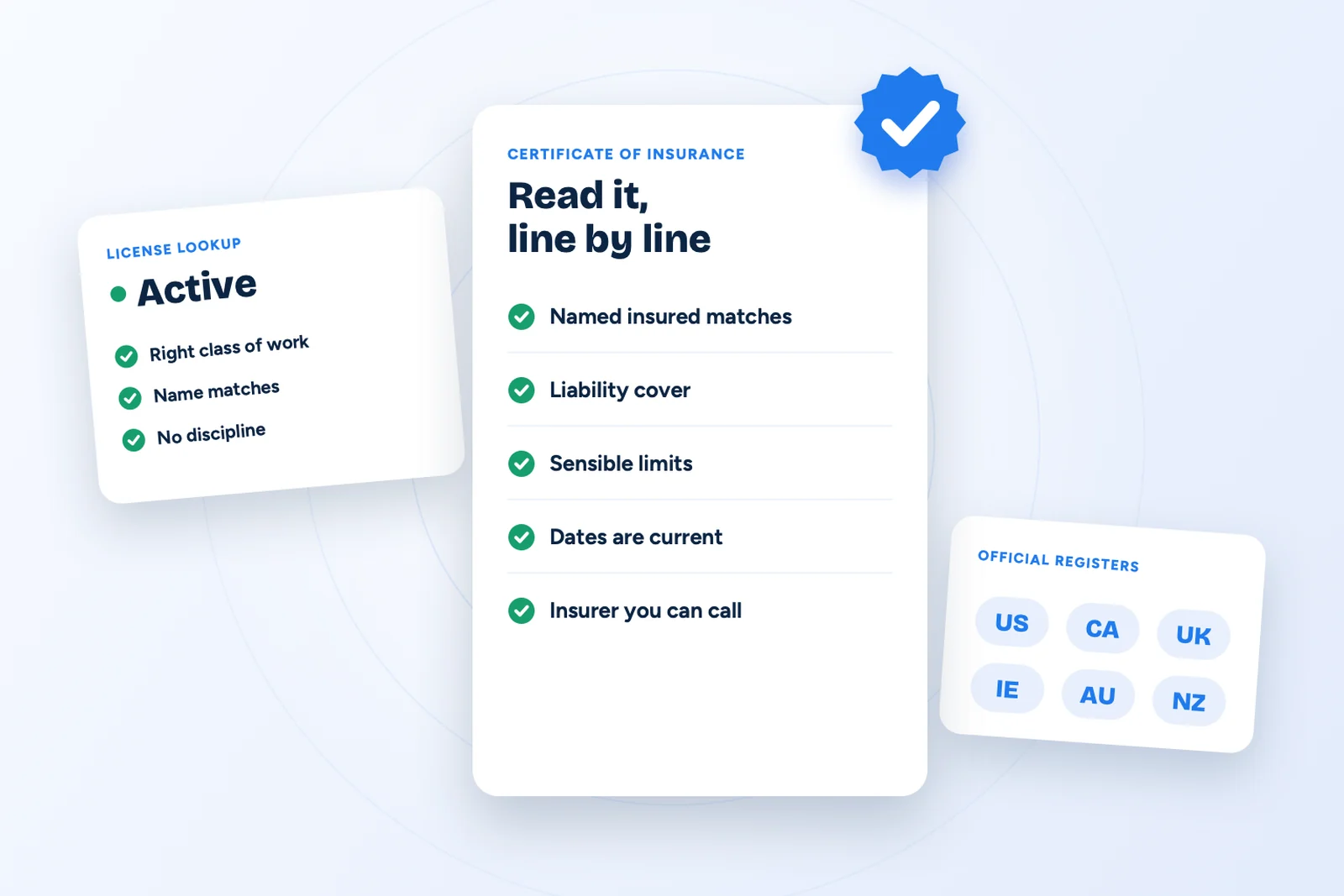
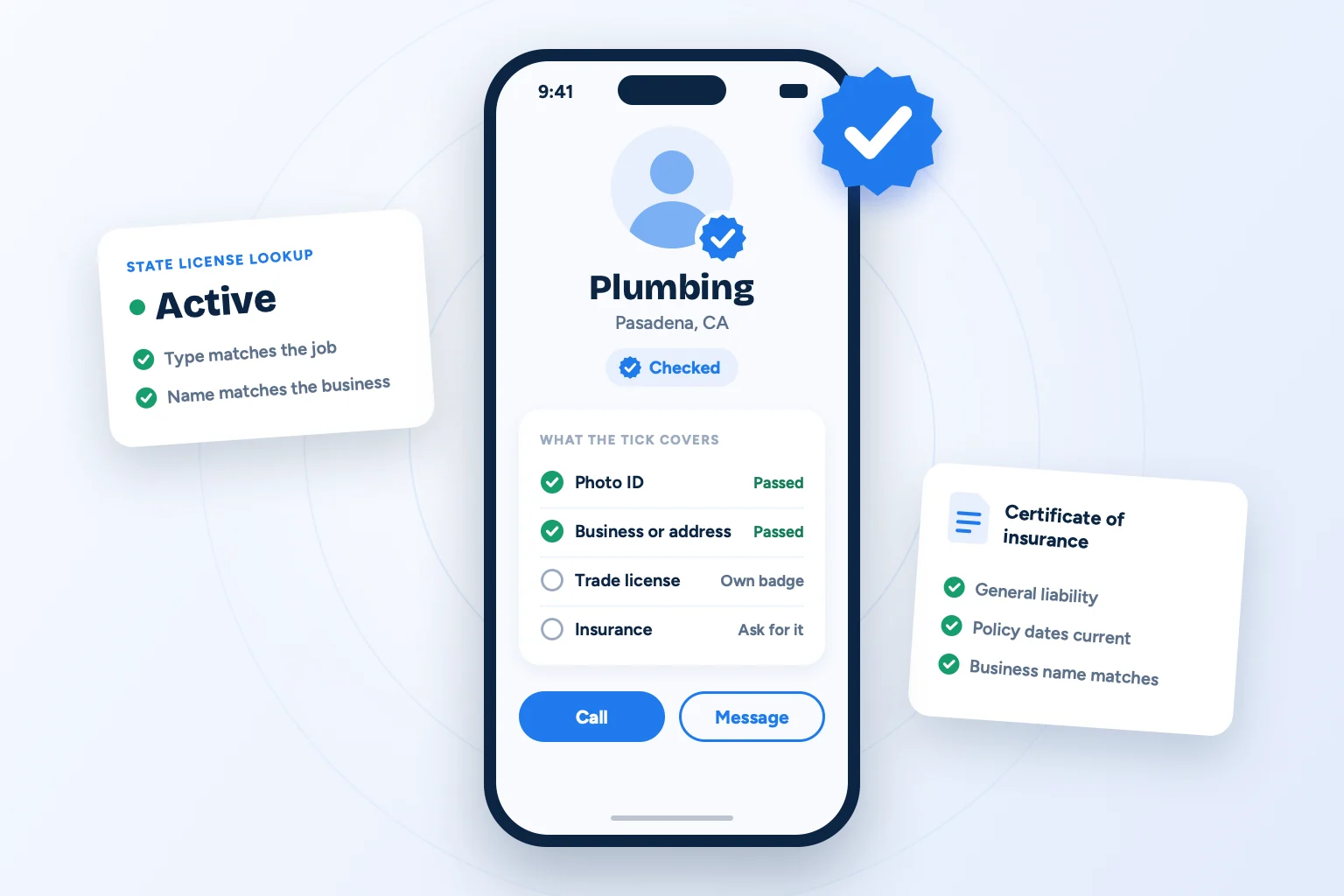
For licensed work, a contractor who will not give you a license number, or whose number does not match their name or the class of work, is a stop sign. So is "fully insured" with no certificate behind it, and a suggestion to skip the permit to save money. Unpermitted work can void an insurance claim and resurface when you sell.
These are checks you can do yourself in minutes. Our guide explains how to check a license and read a certificate of insurance, and what to do when something does not match.
A price far from everyone else's
A quote far below every other one usually means something is missing: part of the scope, the permit, the insurance, or the intention to finish. The contractor may plan to make it back with extras once your kitchen is in pieces and you have no choice.
A quote far above the others is less dangerous but still worth a question. Ask each contractor what their price includes, and compare them properly before you decide which one is out of line.
Warning signs in how they communicate
How a contractor behaves before the job is the best preview you will get. Watch for these:
- Days of silence, then a rush to start
- Answers that change each time you ask the same question
- Reluctance to share references, photographs of past work, or reviews from real jobs
- A business address that cannot be found, or only a mobile number and a first name
- Criticism of every other contractor you mention
- No questions about your job before giving a price
Good contractors ask questions, explain options, and say what they do not know yet. Asking questions that bring these out early is the easiest way to find out which kind you are dealing with.
Reviews that look too good
Reviews help, but only when they are real. Be cautious of a profile with dozens of five-star reviews posted in the same week, reviews that are all short and vague, or praise that never mentions an actual job. A contractor with a handful of detailed reviews describing work like yours is usually a safer bet than one with a hundred that say "great service".
Check where the reviews come from. On some sites anyone can leave one. On Taskovery, only a customer who hired the contractor and saw the job through to completed can review them, and the contractor can reply in public. Read the replies as well as the reviews: a calm, factual answer to a complaint is a good sign, and an argument is not.
Ask for a reference or two for bigger jobs, and actually call them. Ask whether the job finished on time and on budget, how problems were handled, and whether they would hire the same contractor again.
What to do if you spot one
If it is a single, small flag, ask about it. There may be an ordinary explanation, and a professional will give it. If it is a pattern, or a big one such as a missing license, a demand for cash up front, or pressure to sign now, walk away politely and move on to the next name on your list.
If you have already paid, or you think you have met a scam, keep every message and receipt and report it: in the US to your state attorney general's consumer protection office, in Canada to your provincial consumer protection office, in the UK to the Citizens Advice consumer service, in Ireland to the Competition and Consumer Protection Commission, in Australia to your state or territory fair trading office, and in New Zealand to the Commerce Commission. On Taskovery, you can also report a contractor from the job itself, and a person reads every report.
Need this done?
Describe the job once and contractors near you get in touch. It costs you nothing.