What to Ask a Contractor Before You Hire
Know what to ask a contractor before you hire. Get clear answers on scope, price, timing, credentials, permits, and communication before work starts today.

A vague estimate can turn a simple repair into an expensive argument. Before anyone starts demolition, opens a wall, moves furniture, or orders materials, know what to ask a contractor. The right questions make it easier to compare professionals, spot missing details, and choose the person you want working on your property.
You do not need to interrogate every contractor like a construction manager. You do need clear answers in writing for the parts that affect your money, schedule, and home. A good contractor should be comfortable explaining the work, the assumptions behind the estimate, and what happens if the job changes.
What to ask a contractor about the job itself
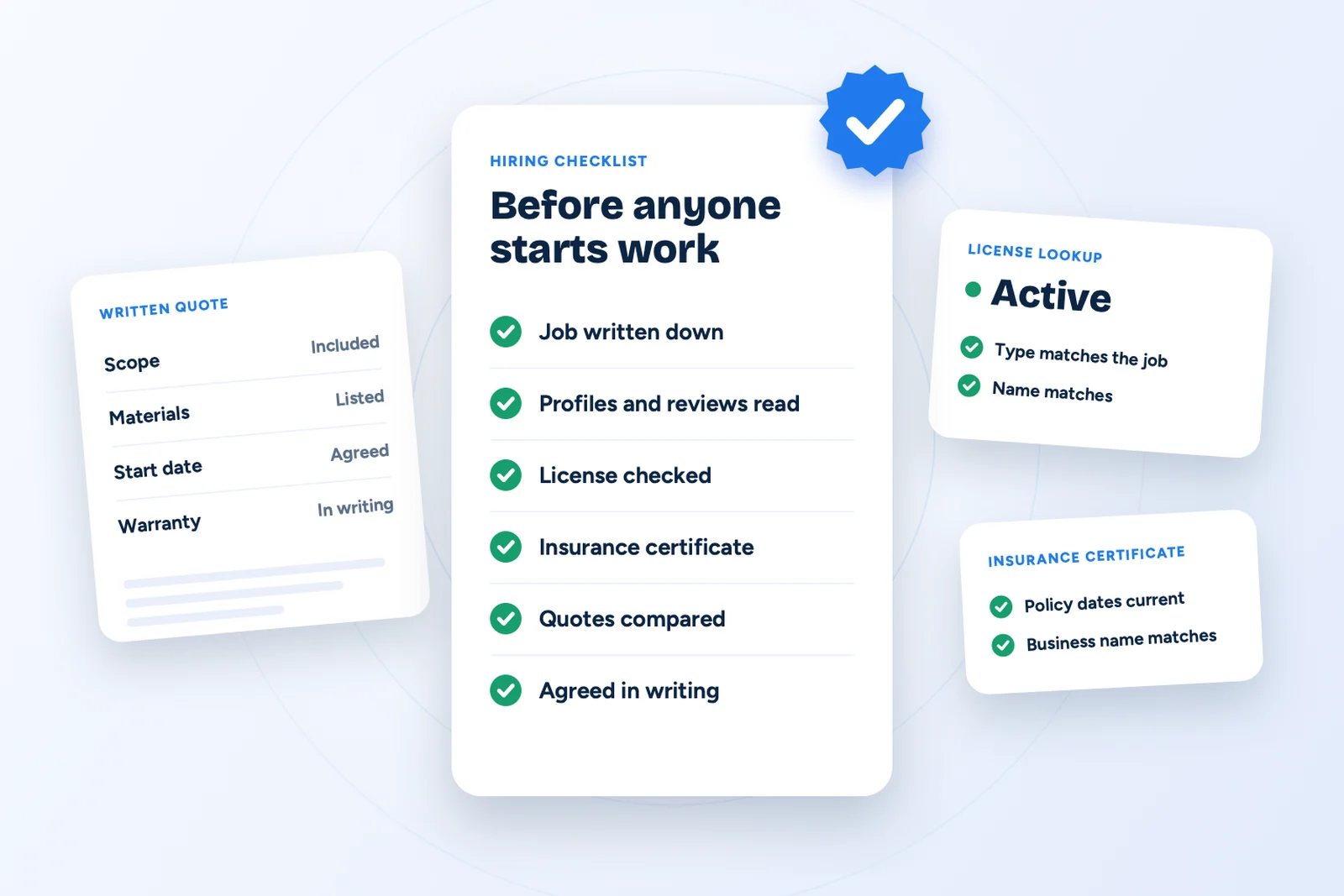
Start with the scope. This is the plain-language description of what the contractor will do and what they will leave alone. For a bathroom repair, that might mean fixing a leaking supply line and replacing damaged drywall, but not repainting the entire room. For a move, it might mean loading, transport, and unloading, but not packing boxes or disposing of unwanted furniture.
Ask: What work is included, and what is excluded? Then ask the contractor to put that answer in the estimate, proposal, or contract. Verbal agreements are easy to remember differently after a job is underway.
It also helps to ask what the contractor expects to find. Some work has hidden conditions. A painter may find water damage under peeling paint. A plumber may find corroded piping once a wall is opened. A landscaper may discover roots, buried debris, or poor drainage below the surface.
Ask these follow-up questions:
- What conditions could change the scope or price?
- If you find an issue, will you stop and explain my options before doing extra work?
- Who approves changes, and how will that approval be documented?
- What will the finished result include, such as cleanup, patching, paint touch-ups, or haul-away?
The point is not to demand a promise that surprises will never happen. It is to establish that no extra work happens without a conversation and your approval.
Ask how the price is built
“What's the price?” is necessary, but it is not enough. Two estimates can look far apart because one includes materials, disposal, permits, cleanup, and labor while the other covers only the basic task.
Ask whether the quote is a fixed price, an hourly rate, a day rate, or an estimate that may change based on actual conditions. Each arrangement can make sense. A defined task with a clear scope may suit a fixed price. Troubleshooting an intermittent appliance issue or a concealed leak may be harder to price until the contractor investigates.
Ask for a breakdown that makes the major cost categories understandable. You do not need every screw listed separately. You should be able to see whether materials are included, whether they are an allowance, and whether disposal, travel, equipment, or permit costs are separate.
Be direct about payment as well. Ask when payment is due, whether a deposit is requested, what milestones trigger additional payments, and what payment methods the contractor accepts. Keep records of invoices, approved changes, and payments. On Taskovery, customers pay the contractor directly, so those payment details should be clear before work begins.
A lower quote is not automatically the better quote. It may be a better value, or it may leave out labor, prep, materials, or finishing work you assumed was included. Compare scope before comparing totals.
Ask about timing, access, and the people on site
A contractor's schedule affects more than convenience. It can affect how long a kitchen is unusable, when a rental unit can be turned over, or whether a repair is completed before further damage occurs.
Ask when the contractor can start, how long the work is expected to take, and which factors could delay it. Weather, material availability, permit timing, inspections, and unexpected conditions can all matter. Look for a realistic answer, not an overly certain one.
You should also ask who will do the work. Will the person giving the estimate be on site? Will employees, helpers, or subcontractors be involved? Who is your main point of contact if you are at work, managing a property remotely, or unable to be home during the day?
Discuss practical access before the first workday: parking, gate codes, elevator reservations, pets, children, shared hallways, building rules, and areas that must stay clear. For larger or messier projects, ask how the work area will be protected and how debris will be handled. These details prevent avoidable friction.
Ask about credentials, permits, and coverage
The right requirements depend on the job and where you live. Electrical, plumbing, HVAC, structural, and major renovation work may have licensing or permit rules. Smaller cleaning, assembly, yard, or basic handyman tasks may not require the same paperwork.
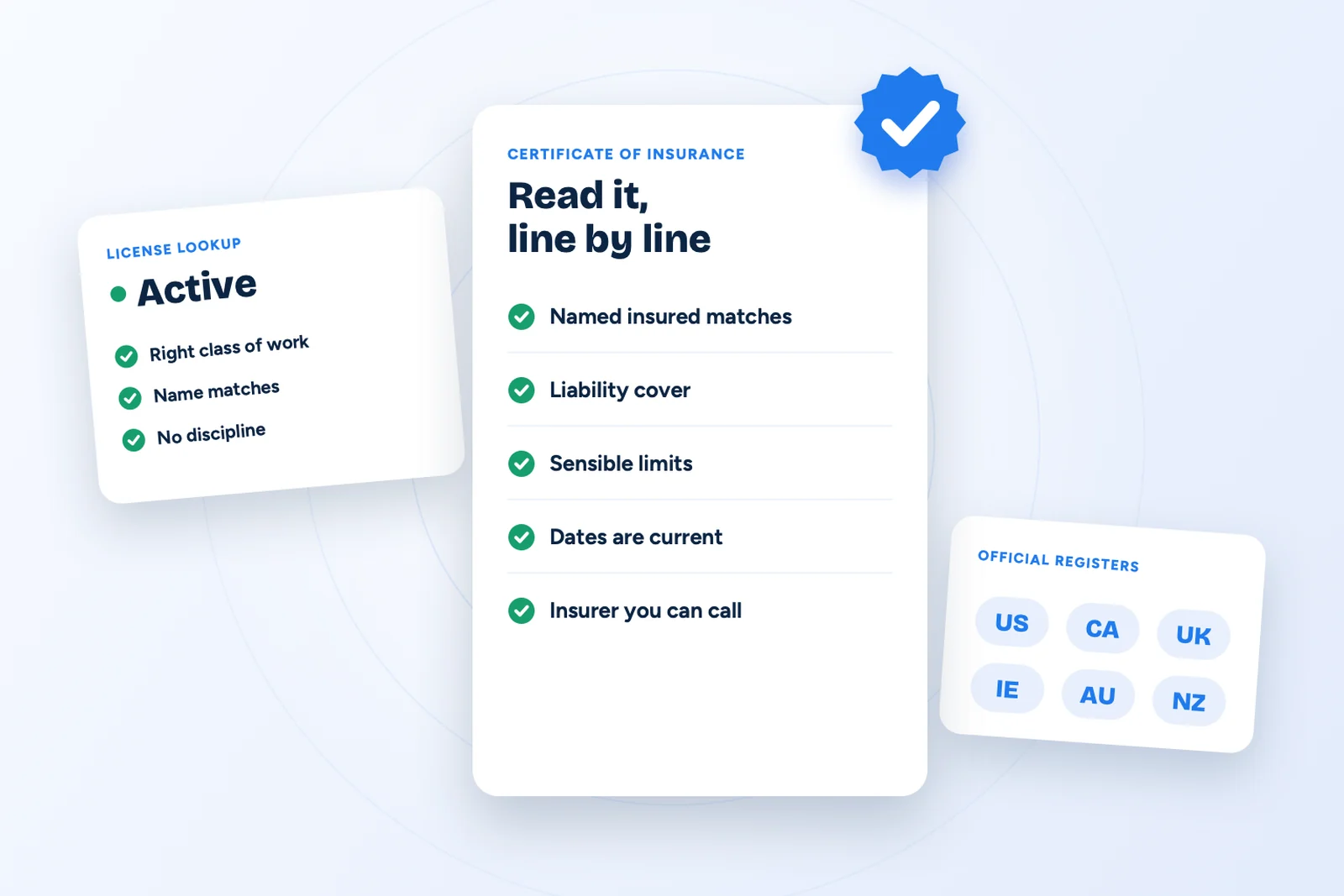
Ask whether the contractor holds any license required for this specific work in your state or local area, and ask for the license information if applicable. You can verify it with the relevant state or local licensing authority. If a permit may be needed, ask who will obtain it, who pays the fee, and whether inspections are part of the expected timeline.
Also ask whether the contractor carries current liability insurance and, where relevant, workers' compensation coverage. Request proof directly if that matters for your project, building, or property policy. Do not assume a profile, a business card, or a verbal assurance answers this question.
When reviewing contractors on Taskovery, you can see identity-checked profiles, service areas, completed-job counts, customer reviews, and past-work photos where available. Use that information to narrow your choices, then ask job-specific questions directly. A strong profile is useful context. It does not replace a clear discussion of your particular project.
Ask how they communicate when plans change
Most contractor problems are communication problems before they become work problems. The contractor may be capable, but a missed message, unapproved change, or unclear expectation can still create a bad result.
Ask how updates will be handled. Will you receive a call, text, or message if the contractor is delayed? Will photos be sent if you are off-site? How quickly should you expect a response during active work? For a multi-day project, ask when you will review progress and decisions.
Set one simple rule early: changes to scope, price, or schedule need your approval before they move forward. That does not mean every small decision needs a meeting. It means the contractor should not assume permission to add significant labor, materials, or work you did not authorize.
This is especially useful for property managers and landlords. Name the person allowed to approve changes and provide the best contact method. Otherwise, a tenant, maintenance staff member, and contractor may each assume someone else made the decision.
Ask for references or examples when the job is specialized
For a straightforward garbage removal pickup or furniture assembly, a clear scope and good communication may be enough. For a remodel, custom finish work, major landscaping, or a complicated repair, ask to see examples of similar completed work.
Ask what was involved in those jobs, not just whether the photos look good. A contractor may do excellent general painting but have limited experience restoring water-damaged plaster. They may be skilled at moving apartments but not set up for a large office relocation. Relevant experience matters more than a long list of unrelated services.
If you speak with references, ask practical questions: Was the scope clear? Did the contractor communicate changes? Was the site treated with care? Did the final invoice match the approved work? These questions reveal more than asking whether someone “liked” the contractor.
Questions that deserve a pause
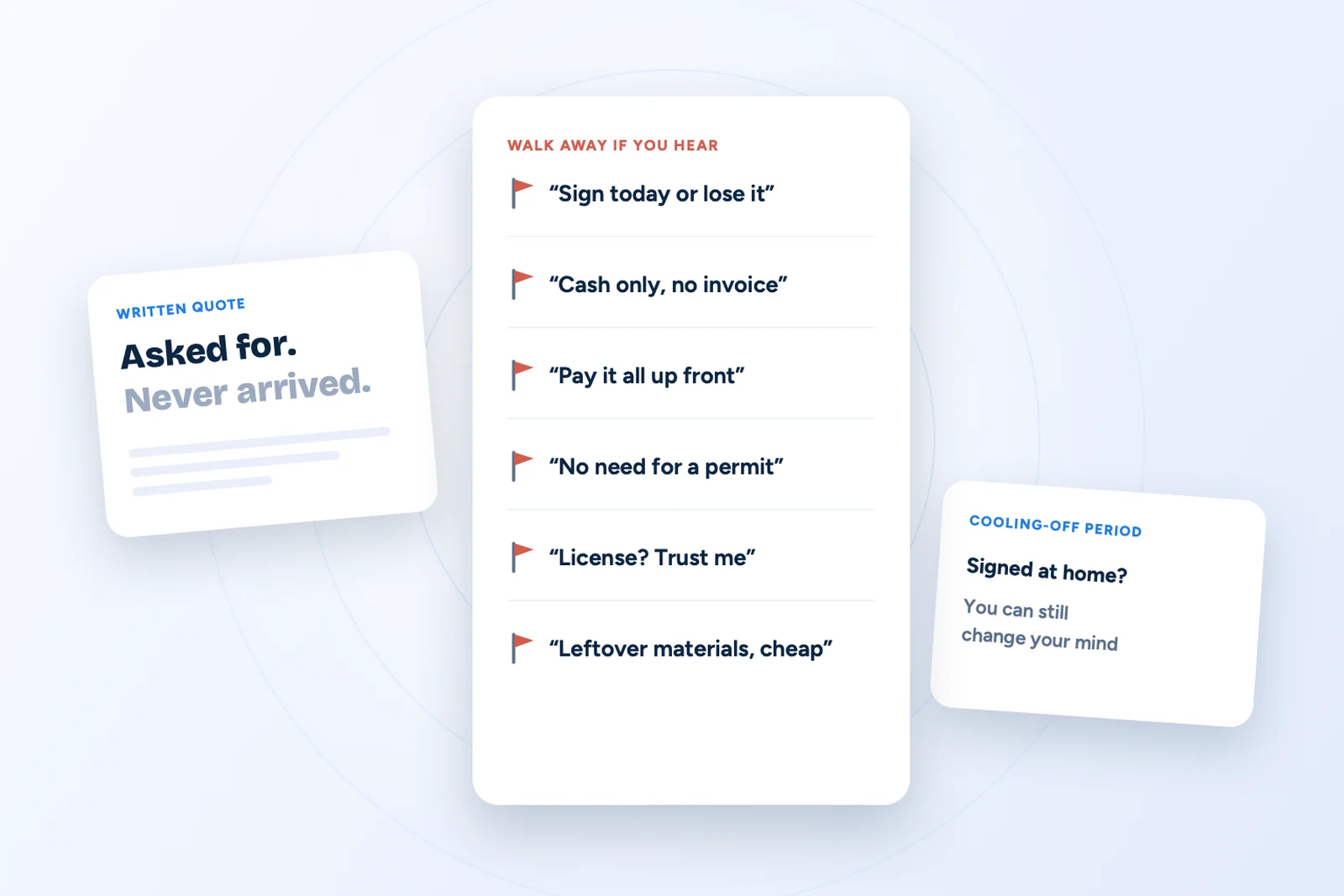
Be careful when a contractor refuses to describe the scope, cannot explain how pricing may change, pressures you to decide immediately, or dismisses reasonable questions about permits and coverage. One issue does not always mean the contractor is unqualified. There may be a simple explanation. But vague answers across several important areas are a reason to slow down.
The same applies to your own expectations. If you want a particular brand, finish, cleanup standard, workday, or communication method, say so before hiring. Contractors price and plan based on the information they receive. Clear requests give you a fairer comparison and give the contractor a real chance to meet the standard.
Hiring a contractor is not about finding someone who says yes to everything. It is about choosing a professional who gives you straight answers, documents the plan, and respects your right to approve the work before it changes.
Need this done?
Describe the job once and contractors near you get in touch. It costs you nothing.