How to Find a Local Contractor Fast and Safely
Need to find a local contractor fast? Learn how to check profiles, compare estimates, and hire direct without surprise fees, shared leads, or pressure.

A leaking supply line under the sink, a dead refrigerator, a move-out deadline, or a tree branch across the driveway changes the usual hiring process. You need to find a local contractor fast, but rushing should not mean handing your home, money, or contact information to the first person who answers.
The fastest safe route is simple: define the job clearly, look for the right trade near you, review real evidence of their work, speak directly, and make the final choice yourself. Speed matters. So does knowing exactly who is coming to your property and what they plan to charge.
Start with the problem, not a vague request
A contractor can respond faster when the job is described in plain, useful detail. “Need help with plumbing” creates a lot of back-and-forth. “Kitchen sink is backing up, disposal runs but water will not drain, available after 4 p.m.” gives a plumber something they can assess.
Include the location, when you need help, the issue, and any access details that affect the work. Photos and a short video can save hours for visible damage, appliance error codes, furniture assembly, yard debris, paint damage, or a vehicle problem. Do not share sensitive details such as alarm codes, gate codes, or your full financial information.
Be honest about urgency. A burst pipe, sparking outlet, gas smell, active roof leak, or no heat during freezing weather may require emergency service. In a life-safety situation, contact emergency services or the appropriate utility first. For most urgent repairs, a clear description helps a qualified local pro decide whether they can take the job today.
Choose the trade that matches the work
The phrase “contractor” covers very different kinds of professionals. Calling the wrong trade can cost time, especially when the problem is urgent.
For a clogged drain, water leak, toilet issue, or water-heater failure, start with plumbing. For tripped breakers, damaged wiring, or outlet problems, look for electrical work. Appliance repair fits a refrigerator that is warm, a dryer that will not heat, or a dishwasher that will not drain. Handyman help can be a good fit for smaller repairs, mounting, minor carpentry, and assembly, while structural changes, major renovations, and additions usually call for a construction specialist.
Some jobs overlap. A bathroom refresh might involve painting, plumbing, electrical work, tile, and construction. In that case, ask whether the contractor handles the full scope or only one part of it. There is nothing wrong with hiring separate specialists. The key is to know who is responsible for each stage before work starts.
How to find a local contractor fast without guessing
When time is tight, use a service that lets you search available local contractors and contact them directly, or post the job for relevant professionals to review. Both approaches work. The right one depends on the job.
Direct contact is usually best when you know the trade and need an immediate answer. For example, a blocked drain or broken appliance may call for a quick phone conversation with a nearby pro. Posting a job makes more sense when the scope is larger, you want several interested contractors to respond, or you are not sure who is available.
Taskovery supports both options. Customers can review nearby contractor profiles, then call or message directly, or post a job for qualified contractors in the relevant trade. The job is checked before contractors see it. Customers do not pay a platform service surcharge and pay the contractor directly.
That direct relationship matters. You should not have to wonder whether multiple people bought your phone number or whether a platform will add a percentage to the invoice. A contractor should be able to inspect the work, explain the options, and quote their own price. You choose whether to hire them.
Review proof before you book
Fast hiring still needs a short verification step. You are not trying to perform a full background investigation in an hour. You are looking for enough evidence to make a sound first decision.
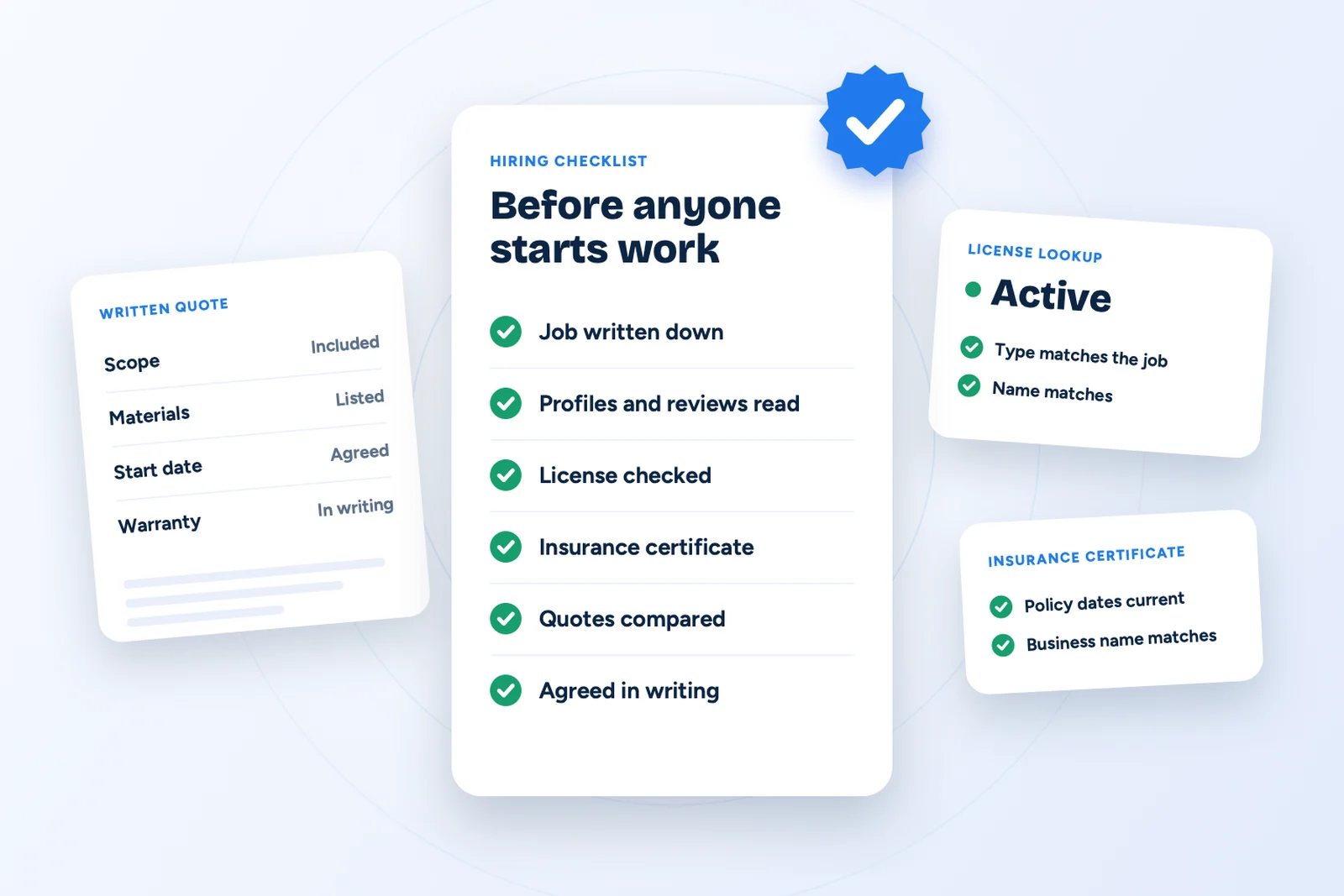
Start with the contractor profile. Look for identity verification, customer reviews, completed-job counts, photos of past work, service areas, and a clear description of what they do. A profile with photos relevant to your task is more useful than a long, generic claim that someone can handle “anything.” For a deck repair, look for carpentry or outdoor repair examples. For an interior paint job, look for clean edges, prep work, and rooms similar to yours.
Read reviews for details, not just star ratings. Do customers mention showing up on time, explaining a repair, protecting the home, cleaning up, or sticking to an agreed scope? One unhappy review does not automatically rule someone out. Look at the pattern and whether the contractor responds professionally when problems arise.
For work that requires licensing, permits, insurance, or specialized safety knowledge, ask directly about those requirements in your state or city. Rules vary by location and project type. A small assembly job and a major electrical panel upgrade should not be screened the same way.
Make the first call count
A five-minute conversation can reveal more than a polished profile. Explain the issue, confirm whether the contractor can serve your address, and ask when they can arrive. Then ask what they need before giving a price.
A careful contractor may not give a fixed quote until they inspect the job. That is often reasonable, particularly for hidden leaks, electrical faults, structural damage, or repairs where the cause is unclear. Ask for a service-call fee, hourly rate, diagnostic charge, or estimated range before they come out. Ask whether that fee is applied to the repair if you approve the work.
For a straightforward job, get the scope in writing by message or estimate. It should state what is included, what materials are included if applicable, and what could change the price. If additional work is found, ask the contractor to stop and explain the change before proceeding.
Compare more than the lowest number
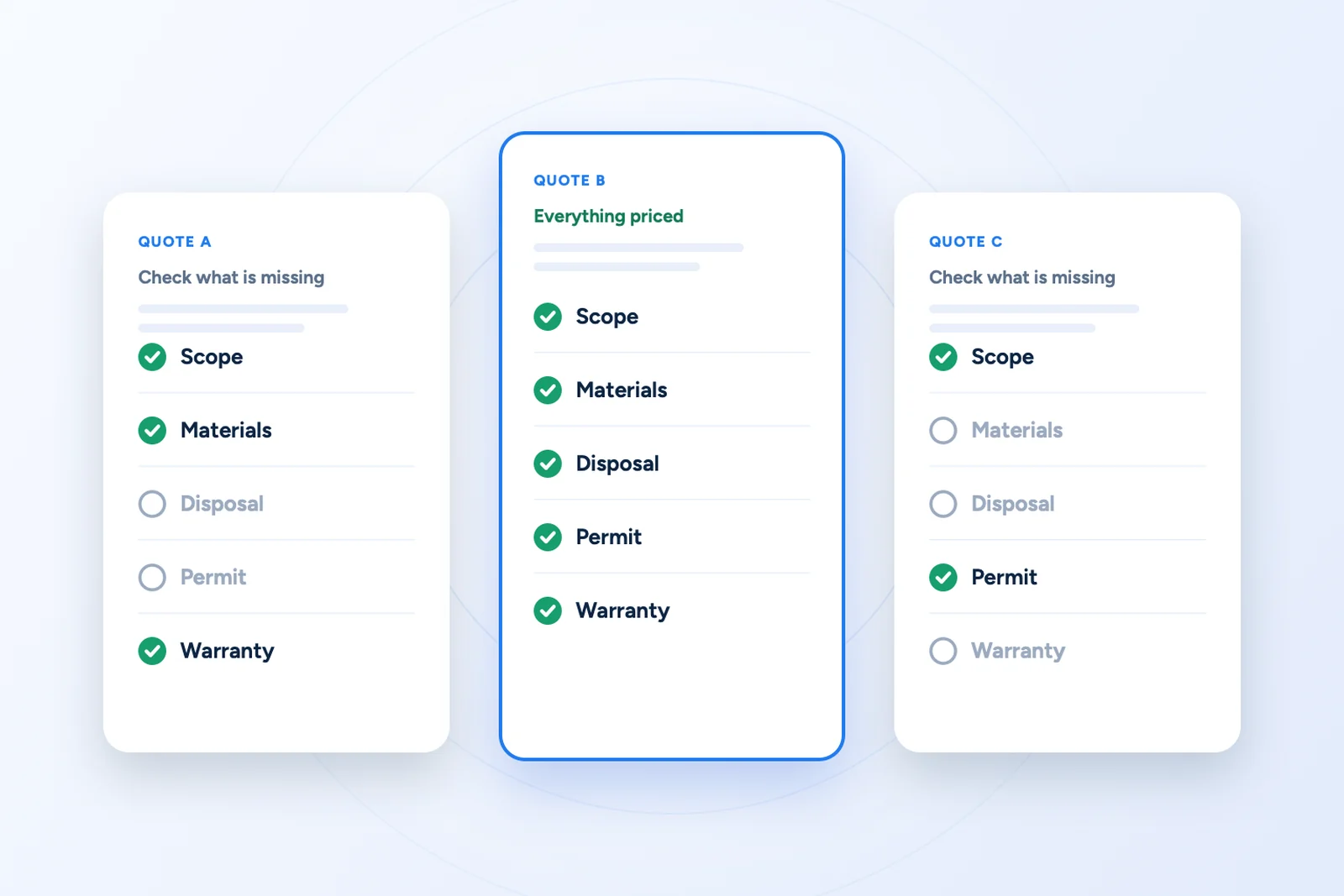
The cheapest estimate is not automatically the best deal. A low quote may exclude disposal, materials, permit costs, prep work, haul-away, or the repair that actually caused the visible problem. On the other hand, the highest estimate is not automatically better just because it is more detailed.
Compare the same scope. If one painter includes patching, primer, two coats, furniture protection, and cleanup while another only includes paint application, those are not equal estimates. If a mover quotes a flat price and another charges hourly, ask about travel time, stairs, heavy-item fees, and minimum hours.
You also have a practical trade-off to make. A contractor who can come in two hours may charge more than one available tomorrow. For an active leak or a refrigerator full of groceries, faster service may be worth it. For a cosmetic repair, waiting for the better fit can save money and frustration.
Watch for pressure and unclear terms
Move on if someone insists on a large cash payment before explaining the work, refuses to provide even a basic written scope, will not identify their business, or pressures you to decide immediately. Be cautious when a price is dramatically lower than every other quote without a clear reason.
You should also be wary of vague marketplace practices. If you cannot see who is interested, cannot contact the contractor directly, or learn about added fees only at checkout, you have less control than you should. Clear terms protect both sides: customers know what they are paying, and independent contractors keep control of their prices and invoices.
For larger projects, do not pay the entire amount upfront. Use a written agreement that covers the scope, payment schedule, materials, timeline, permit responsibility, and what happens if conditions change. Keep records of messages, estimates, invoices, and approved changes.
Be ready when the contractor arrives
Fast service goes faster when the work area is accessible. Clear the cabinet under a sink, move fragile items away from a repair area, secure pets, and have building access arranged if you live in an apartment or manage a rental. Tell the contractor about parking restrictions, elevator rules, or tenant schedules before the appointment.
When they arrive, walk through the problem once more. Confirm the scope and the expected price or pricing method before work begins. If the contractor discovers a bigger issue, ask for the options in plain language: what must be fixed now, what can wait, and what each choice costs.
The right local contractor does not need a complicated process to earn your business. Give them a clear job, review the evidence, ask direct questions, and keep the final decision in your hands. That is how urgent help stays fast without becoming a costly mistake.
Need this done?
Describe the job once and contractors near you get in touch. It costs you nothing.