When to Call an Electrician: What Needs a Pro
When to call an electrician: the faults that need one today, what needs a permit and an inspection, how electricians price, and what is safe to do.

Electrical faults are the only home repair where waiting has a real downside beyond inconvenience. A dead outlet is annoying. A warm outlet, a burning smell or a breaker that trips every evening is the house telling you something. Knowing when to call an electrician is mostly knowing that, for residential electrical repair, the right answer is nearly always a licensed one rather than an afternoon online.
For anything beyond a bulb or a tripped switch, post your electrical job free and check the electrician’s license before work starts.
This guide covers what needs somebody today, what a normal repair involves, which work needs a permit and an inspection, what the pricing looks like, and the short list of things a homeowner can safely do. Codes vary by country, state and city, so treat everything here as the conversation to have with a local electrician rather than as a substitute for one, and use the full hiring checklist when you choose who comes.
When to call an electrician today
A burning smell, scorch marks or discoloration around an outlet or switch. An outlet or switch plate that is warm to the touch. A breaker that trips again as soon as you reset it. Buzzing, crackling or humming from a panel, outlet or switch. A shock, even a small one, from an appliance, a faucet or a light switch. Lights across the house dimming and brightening on their own.
Those signs point at arcing, overheating or a loose neutral, and they are fire and shock risks rather than inconveniences. Switch off the circuit at the panel if you can identify it safely, stop using it, and get an electrician out. If there is smoke, or water anywhere near the panel, leave and call the fire service rather than investigating. When a leak is the cause, the power comes first and then the steps for a plumbing emergency.
Do not keep resetting a breaker that will not stay on. It is not being temperamental. It is doing the job it was installed to do.
The repairs electricians do most
A dead outlet is often a tripped GFCI somewhere else on the circuit, sometimes in a garage or a bathroom nobody thinks about. Worn outlets and switches wear out and get replaced. GFCI and AFCI devices fail or nuisance trip and need testing and replacement. Light fixtures, fans and dimmers get swapped, and dimmers with modern bulbs are a common source of flicker. If one appliance trips the breaker and nothing else does, the fault may be in the machine: see when it is the appliance, not the wiring.
Behind the walls, the frequent finds are backstabbed connections working loose, overloaded circuits in older kitchens, a neutral that has come loose in a panel, and connections in junction boxes that were never made properly. In older homes there is also aluminum branch wiring, which is not automatically dangerous but needs approved connectors and an electrician who knows the method.
Then there is the work people plan rather than fix: a panel upgrade, a dedicated circuit for a kitchen appliance or a workshop, outdoor outlets, and an electric vehicle charger. All of those are new circuits, and new circuits are a different legal category from repairs.
Not everything near a wire is electrical work, either. A loose fixture that needs refixing to its box, a cracked cover plate, or a cable clipped untidily along a baseboard is among the small jobs a handyman can do, as long as the circuit itself is left alone.
What needs a licensed electrician and a permit
The rough rule across most of the United States is that swapping a device for the same kind of device in the same place is maintenance, while running new wire is new work. Replacing an existing outlet or switch is usually permit exempt. Adding an outlet, adding a circuit, or replacing or upgrading a panel generally needs a permit, a load calculation for panel work, and an inspection at the end.
Who can pull that permit depends on where you live. Many jurisdictions let a homeowner pull one for their own owner occupied home, while several dense cities and states restrict residential electrical permits to licensed electricians almost entirely. Rental property, second homes and anything commercial are licensed work everywhere, so landlords should not be making this call at all.
Outside the US the line is usually drawn tighter. In Australia, electrical work on fixed wiring must be done by a licensed electrician in every state and territory. In New Zealand a homeowner may do limited work on their own home, but it must be tested and certified by a licensed electrical inspector before it is connected. In England and Wales, notifiable work in a home goes through building control or an electrician registered with a competent person scheme such as NICEIC or NAPIT. In Ireland, use a contractor registered with Safe Electric. In Canada the province sets the rules, and in Ontario the Electrical Safety Authority licenses contractors and issues the permits.
Permits are not bureaucracy for its own sake. Unpermitted electrical work shows up when you sell the house, and it is the first thing an insurer asks about after a fire. If a quote suggests skipping the permit to save money, that is the quote to decline.
What GFCI and AFCI protection is doing
A GFCI watches for current leaking to ground, which is what happens when electricity finds a person or water instead of the neutral wire. The US code requires this protection in kitchens, bathrooms, garages, basements, outdoors and generally within six feet of a sink, and it is the single cheapest safety device in a house. Outside North America the same protection is called an RCD, or a safety switch in Australia.
An AFCI watches for the signature of an arc, the sputtering connection behind a wall or inside a damaged cord that starts fires. Modern codes require arc fault protection, called an AFDD in some countries, on many living space circuits, and renovations usually bring the circuits they touch up to current requirements even when the rest of the house is left alone.
Test both with the buttons on the device about once a month, and replace any that will not trip and reset. A device that trips repeatedly is reporting a fault on the circuit, not malfunctioning, and that is a call rather than a reset.
What it costs, and how electricians price
Most residential work is priced either as a service call with an hourly rate after the first hour, or from a flat rate book where each task has a set price. Both are reasonable. What matters is knowing which one you are being quoted, and whether the diagnostic time is charged separately or included.
The other items on a bill are materials, a permit and inspection fee where one applies, and an emergency or after hours premium if you called at night. Panel work and new circuits cost far more than device swaps, because they involve load calculations, heavier materials, and an inspection.
Get the scope in writing before work starts, especially for anything behind a wall, and ask what happens if the diagnosis changes once the cover comes off. To have licensed electricians quote your actual fault, post the job with photographs and a description of when it happens.
Before the electrician arrives
Fifteen minutes of notes will shorten the diagnostic time you are paying for:
- Write down exactly what fails, and what is running when it fails
- Test every outlet, light and appliance on the affected circuit and list the dead ones
- Find and press the reset button on any GFCI outlet in the bathrooms, kitchen, garage and outside
- Clear access to the panel, and photograph it with the door open
- Note the age of the home and any rewiring you know about
- Have the breaker labels checked, and say which labels you know are wrong
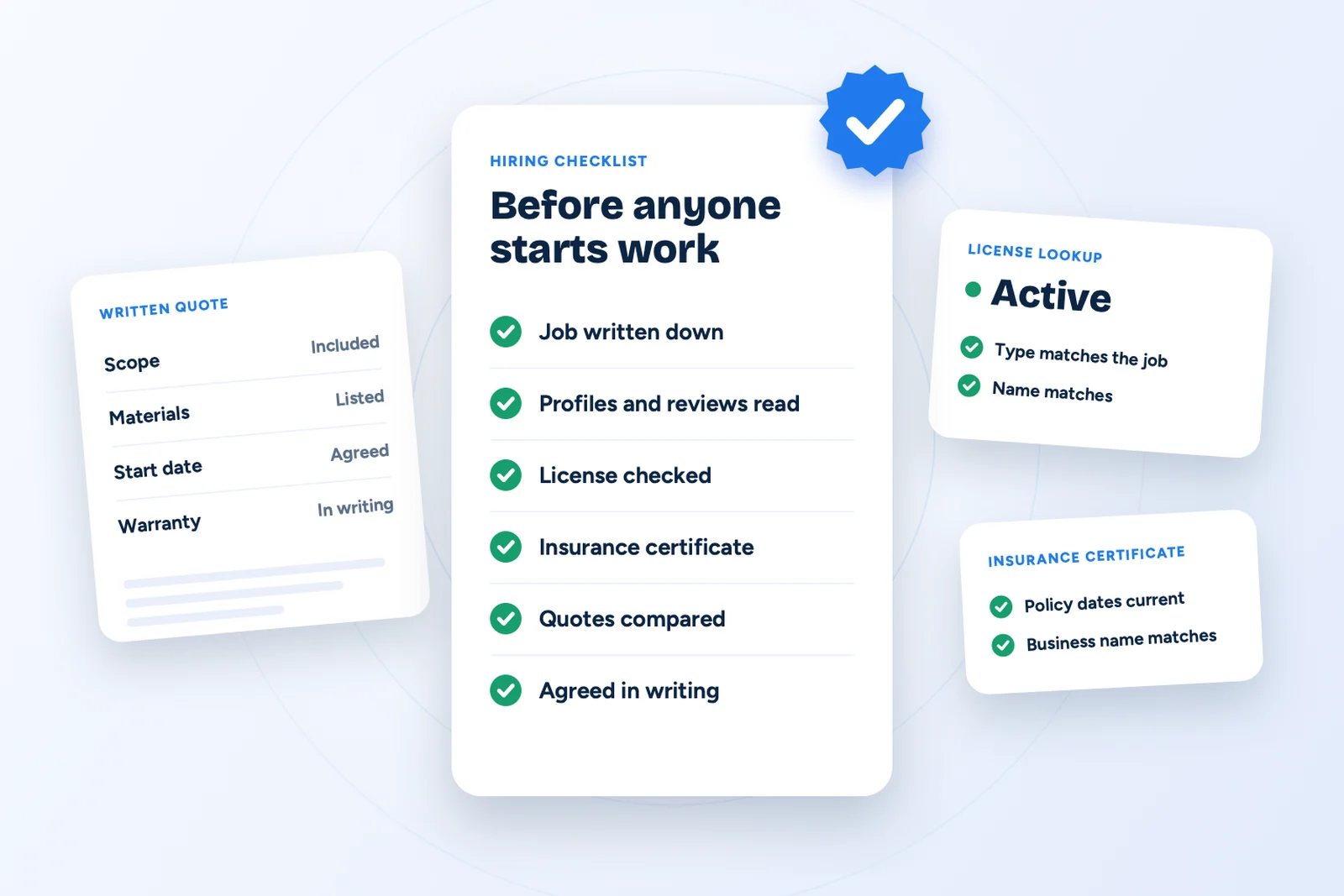
Ask for the license or registration number and check it on the official register, your state licensing board in the US or the national or provincial register elsewhere, exactly as you would for any licensed trade. Ask for a certificate of insurance too. Our guide on how to check the electrician's license and insurance covers what to look for. For the questions worth asking before anybody starts, see what to ask a contractor before you hire.
Older houses and their particular problems
Two prong outlets mean no ground wire, and putting a three prong outlet in that box without a ground is both unsafe and against code. There are accepted ways to handle it, including GFCI protection with the correct labeling, and an electrician will tell you which applies to your wiring.
Knob and tube wiring, cloth insulated conductors, aluminum branch circuits and a panel from a brand with a poor safety record are all worth a proper assessment rather than a repair at a time. Ask for a whole house condition report before you spend money piecemeal, especially if you are about to renovate, add air conditioning or install a charger.
What is safe to do yourself
Resetting a breaker once, pressing a GFCI reset button, changing a bulb, replacing a lamp cord or a plug on a portable appliance, and testing devices with a plug in tester are all reasonable homeowner jobs. Everything beyond that involves conductors that are live until somebody proves otherwise.
The reason to draw the line there is not fear. It is that electrical mistakes hide. A loose connection behind a faceplate works fine for two years and then heats up inside a wall, an insurer can decline a claim traced to unpermitted work, and an unpermitted circuit becomes your problem again at closing. Pay somebody licensed, keep the permit and the inspection record, and the house stays insurable, sellable and safe.
Need this done?
Describe the job once and contractors near you get in touch. It costs you nothing.