Hire a Cleaner for an Apartment: Costs and Checks
Hire a cleaner for apartment work: what a standard clean covers, how the pricing works, what to agree about keys and supplies, and the move out list.

An apartment is a small space with a lot of edges, and the difference between a good clean and a disappointing one is almost always what was agreed beforehand. People who hire a cleaner for apartment work and end up unhappy usually did not say what mattered to them: the inside of the oven, the shower screen, the balcony door tracks, the litter tray corner.
To skip the searching, post your cleaning job free and compare the verified local cleaners who reply.
The fix is a short conversation and a written list. This guide covers the kinds of clean you can book, what a standard visit does and does not include, how the pricing works, what to sort out about keys and supplies, and what a move out clean has to cover if you want your deposit back. Cleaners are hired much like any trade, and our step-by-step guide to hiring a contractor has the general checks.
Decide which kind of clean you are booking
A standard or maintenance clean is the regular visit: surfaces, floors, kitchen, bathroom, dusting and bins. It assumes the apartment is in reasonable order and it is priced for that.
A deep clean is the reset. Inside the oven and the refrigerator, limescale in the shower, skirting boards, door frames, light fittings, behind and under what can be moved. Most cleaners want a deep clean first if the apartment has not been professionally cleaned in a while, and then a shorter standard visit after that.
A move out clean is a different animal again, built around a landlord's checklist rather than daily life. Post renovation cleaning is its own category too, because construction dust travels everywhere and destroys ordinary vacuum filters. Say which one you want, because booking a standard clean and expecting a deep one is the single most common disappointment.
What a standard clean covers, and what it does not
Expect kitchen counters, the sink, the outside of appliances, the stovetop, the bathroom in full, floors vacuumed and mopped, surfaces dusted, mirrors, bins emptied and beds made if you ask.
Usually charged as extras: inside the oven, inside the refrigerator, interior windows, walls, blinds, balconies, laundry, dishes, inside cupboards, and anything that needs a ladder. Ask for the ones you want and expect them to add time.
Normally refused, and reasonably so: mold remediation beyond a light surface wipe, biohazards, pest problems, heavy lifting, hoarding situations, and pet accidents that have soaked into carpet. Those are separate trades with separate equipment. A cleaner who says no to them is telling you the truth about what a mop can fix.
How to hire a cleaner for apartment work
Give the same four facts to everyone you ask: the size in square feet or square meters, or the number of bedrooms and bathrooms, the type of clean, the extras you want, and how often. Those decide the price more than anything else. Add anything unusual, such as a cat that hides, an induction hob, natural stone counters, or a building that needs a fob.
Ask how long they expect the first visit to take and how many people will come. Two cleaners for two hours is the same money as one for four and gets you your apartment back sooner. Ask whether the price is hourly or fixed, and what happens if the apartment turns out to be in worse shape than described.
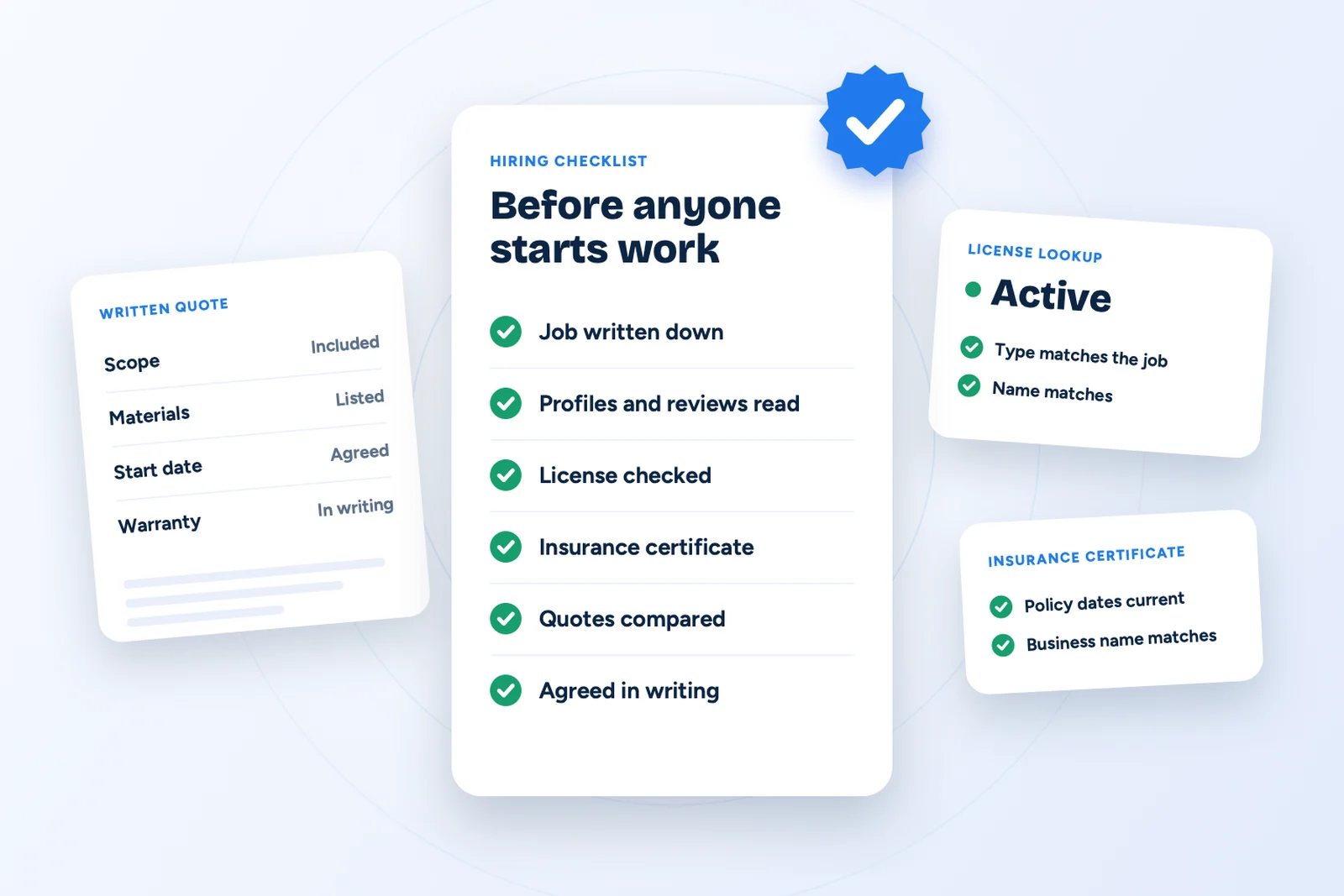
If you would rather compare replies than chase quotes, post the job with the room count and the extras. On Taskovery only contractors whose checks have passed can answer a posted job, and every review on a profile came from somebody who actually hired that person and saw the job through.
What it costs, and what moves the price
Cleaning is priced either by the hour or as a fixed price per visit once somebody knows the apartment. Fixed pricing rewards you when the place is in good order, hourly is fairer on a first deep clean when nobody knows what is behind the refrigerator.
What cleaners charge in 2026, by country
| Country | What published price guides say | Source |
|---|---|---|
| United States | About $50 an hour for a routine apartment clean, typically $25 to $70. A small one-bedroom, one-bathroom apartment averages $75 for a standard clean and $110 for a move out clean | HomeGuide, 2026 |
| Canada | CA$65 to CA$125 an hour for the visit, or CA$35 to CA$65 an hour for each cleaner when a team comes | HomeStars, updated August 2026 |
| United Kingdom | Around £25 an hour for an independent cleaner, £25 to £30 through an agency | Checkatrade, September 2026 |
| Australia | A$55 to A$90 an hour for a self-employed cleaner | Airtasker, August 2026 |
| New Zealand | About NZ$47 an hour on average, from about NZ$46.50 in Auckland to about NZ$48.50 in Wellington | Maid2Match, 2026 |
| Ireland | We have not found a reliable published national figure. Ask two or three cleaners to price the same list | — |
These are published averages, checked in October 2026. They leave out materials, and the city, how urgent the job is and how easy it is to get to move the number more than anything else. Use them to sense-check a quote, not to argue a fair one down.
The things that move the number are size, the number of bathrooms, the condition on the day, the extras, and how often you book. Weekly and fortnightly visits usually cost less per visit than one offs, because the work is smaller each time and the schedule is predictable. A first deep clean often costs two or three times a regular visit, and that is normal rather than a markup.
Ask whether supplies and a vacuum are included, whether there is a minimum charge, and whether parking or a long walk from a garage adds anything. Then ask what happens if you cancel late, since most cleaners charge for a visit they cannot fill.
Get the answer in writing, even if writing means a text message: the type of clean, what is included, the extras, the frequency and the price. That one message prevents nearly every later disagreement, and it is the same habit that works with any trade you let into your home. For the wider version of it, see what to ask a contractor before you hire.
Keys, access and the trust part
Somebody will be alone in your home. Be there for the first visit, walk the apartment together, and point at the things that matter to you. That single walkthrough prevents most complaints, and it is also how you decide whether you want this person back.
Then agree access: a key handed over, a lockbox, a smart lock code that can be changed, or you letting them in each time. If your building needs a fob or a visitor registration, sort it before the first visit. Put valuables, cash, medication and sensitive paperwork away, not because a cleaner is a suspect, but because nobody should have to be trusted with what they never needed to see.
Ask who exactly will come, and whether it is the same person each week. Ask about insurance, and check their profile and reviews before you hand over any kind of key. For more on what a verification badge does and does not prove, see what verified means on a contractor profile.
Agree what happens if something goes wrong while you are out, such as a hose that bursts or a cat that gets past the door. A number that will actually be answered during the visit is usually the whole plan.
Supplies, products and the surfaces that get ruined
Decide who buys what. Many cleaners bring their own products and a vacuum, some expect yours, and plenty prefer using your cloths and mop in your home for hygiene reasons. Either is fine as long as it is agreed and the cost is clear.
Warn them about the surfaces that punish the wrong product. Natural stone counters do not like acidic cleaners, waxed or oiled wood does not like anything wet, induction hobs scratch, and stainless steel shows every circular wipe. Say if anyone in the home has asthma or an allergy, or if you want unscented or low chemical products for a baby or a pet.
Two things worth saying out loud: never mix bleach with anything containing ammonia, and do not expect miracles on grout that has been neglected for years. A good cleaner will tell you when a surface needs restoring rather than cleaning.
Move out cleaning and your deposit
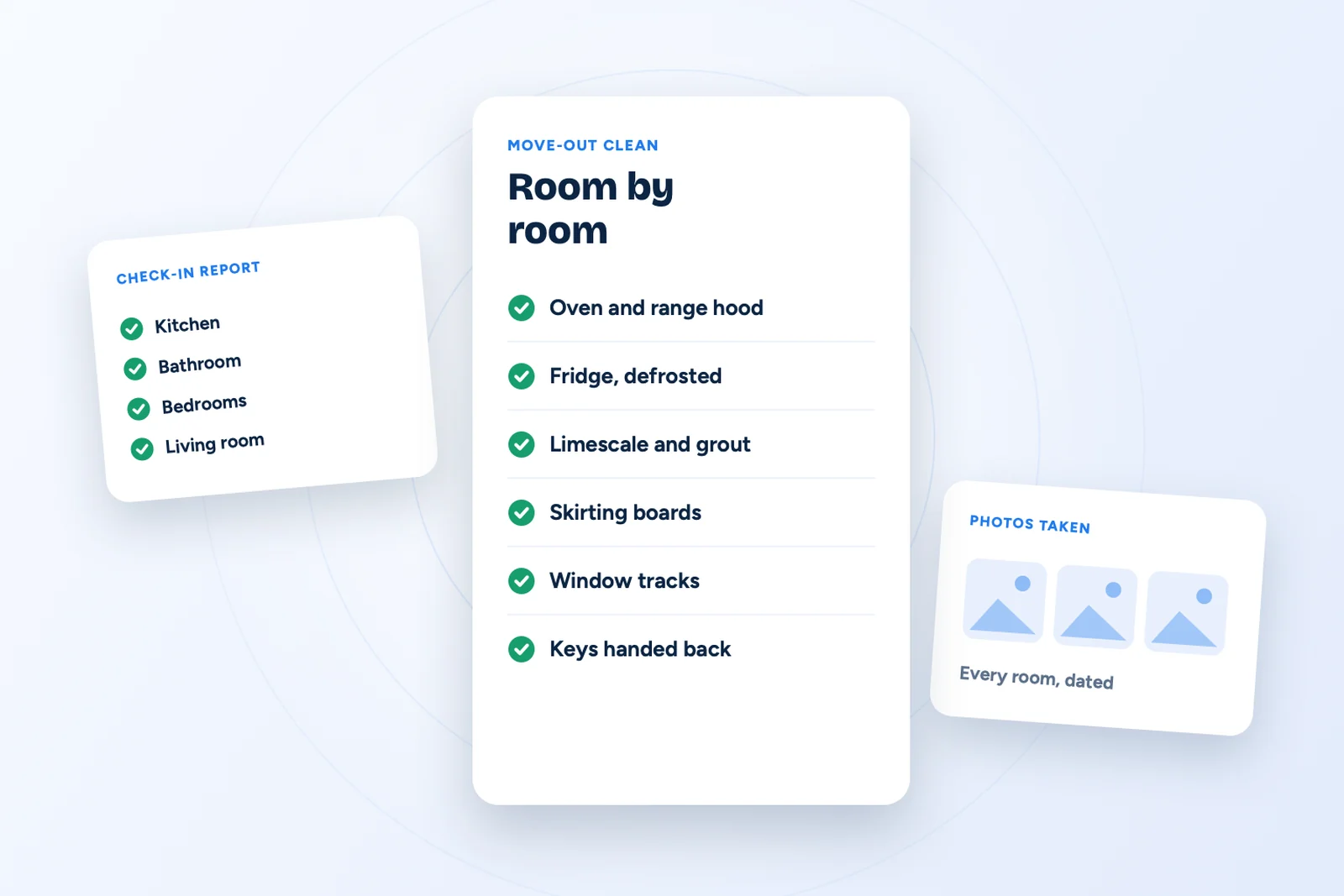
A move out clean is judged against your lease and your landlord's checklist, so start from that document rather than from a general idea of clean. Book it after the furniture has gone, not before, and leave the power and hot water on. If more has been left behind than a car can take, clear the junk first.
These are the items landlords check most often:
- Inside the oven, the grill pan, and under the stovetop
- Inside the refrigerator and freezer, defrosted and dry
- Bathroom limescale, grout, the shower screen and the extractor fan
- Window tracks, sills, blinds and interior glass
- Skirting boards, door frames, switches and light fittings
- Inside all cupboards and wardrobes, and the balcony or patio
Photograph every room when the clean is finished, with a date, and keep the receipt. If your lease asks for professional carpet cleaning, get that receipt too. Both are what settle a deposit argument weeks later. For the full room-by-room version, see the move-out cleaning checklist.
Keeping a cleaner you are happy with
Say what you want early and say it kindly. Most problems are a mismatch of expectation, not effort, and one note about the shower screen fixes a month of quiet irritation. A written list on the counter beats a complaint afterward every time.
Questions people ask about hiring an apartment cleaner
How much does it cost to clean a one-bedroom apartment?
In the United States, HomeGuide puts a small one-bedroom, one-bathroom apartment at about $75 for a standard clean and $110 for a move out clean. Everywhere else, multiply the local hourly rate by the hours the cleaner expects the visit to take, and ask for that estimate in writing before the first visit.
Do I need to provide cleaning supplies?
Ask, because it varies. Many cleaners bring their own products and a vacuum and build the cost into the rate, others prefer to use yours. Either works as long as it is agreed, and say so if you want unscented or low chemical products.
How often should I book a cleaner?
Weekly or fortnightly is the usual rhythm for an apartment, and a regular slot costs less per visit than one offs because each visit is smaller. Start with one deep clean if the place has not been professionally cleaned for a while, then move to the shorter regular visit.
Should I tip an apartment cleaner?
In the United States and Canada a tip for a regular cleaner, especially at the holidays, is common. In the United Kingdom, Ireland, Australia and New Zealand it is optional, and paying on time and keeping the same slot matters more.
Keep the same slot, give proper notice when you need to skip a week, pay on time, and tip at holidays if you can. A cleaner who knows your apartment gets faster and better at it, and that is worth much more than the few dollars an hour you might save by starting again with somebody new.
Need this done?
Describe the job once and contractors near you get in touch. It costs you nothing.