Move Out Cleaning Checklist: Room by Room
Move out cleaning checklist, room by room: what landlords inspect, what to clean in the kitchen and bathroom, and how to photograph it for your deposit.
A move-out clean is judged differently from any other clean. Nobody is going to live with it. Somebody is going to inspect it, with your lease in one hand and a check-in report in the other, and decide how much of your deposit comes back. This move out cleaning checklist is built around what gets inspected, room by room, so the effort goes where the money is.
Use it whether you clean yourself or hire someone. If you would rather hire a cleaner for it, hand them this list and agree which items are included before they start. For hiring anyone, see hiring a contractor, start to finish.
Start with your lease and the check-in report
Read the cleaning clause in your lease before you buy a single product. Some leases ask for a professional clean, a carpet clean with a receipt, or the oven cleaned to a particular standard. Then find the check-in report or the photographs from the day you moved in. The standard you are held to is usually the condition the place was in then, less fair wear and tear, not a showroom.
Fair wear and tear is the ordinary aging of a home: faded paint, light marks on carpet in walkways, small scuffs. Dirt, grease, stains, burn marks and damage are not wear and tear, and they are what deductions are made for.
Clean it yourself or hire someone
A thorough move-out clean of a one-bedroom apartment can take a full day for one person, and longer if the oven has not been touched in a year. If you are also packing, moving and working, that day is the one most people run out of. Hiring a cleaner costs money, but the receipt can help if the lease asks for a professional clean, and a good cleaner works faster with the right equipment.
If you do it yourself, start two or three days before handover with the jobs that take longest: the oven, limescale, and the inside of the refrigerator. Leave floors and the final wipe-down for last. If you hire, book early in busy months, agree the list in writing, and be there at the end to walk through it together.
Clear the place first
Clean an empty home. Furniture hides dust, blocks skirting boards and gets in the way of floors, so book the clean for after everything has gone. Anything you are not taking needs to go first: junk removal before the clean saves the cleaner working around it, and labor only movers can shift what is going with you in a morning.
Leave the power and hot water on until the clean is finished, and keep a bin bag, a vacuum and a basic kit back for the final touch-ups.
Kitchen
The kitchen is where most deposit deductions start, because grease is visible and ovens are easy to check. Work from the top down, and let oven and hob cleaners soak while you do the cupboards.
- Inside the oven, the racks, the grill pan and the door glass
- The stovetop, knobs, and the splashback behind it
- The range hood, including the filter
- Inside the refrigerator and freezer, defrosted, dried, and left with the door ajar if it will be switched off
- Inside every cupboard and drawer, including crumbs in the corners
- The dishwasher filter and door seal
- The sink, faucet and drain, descaled
- Counters, cupboard fronts, handles and light switches
Bathroom
Limescale and mold are the two things inspectors look for first, and both take time, so start the bathroom early and let the products work. Descale the shower head, the screen or curtain rail, the faucets and the glass. Clean the grout and silicone, and treat mold rather than just wiping it. Scrub the toilet, including under the rim, behind the seat hinges and around the base. Clean the mirror, the cabinet inside and out, the extractor fan cover, and the tiles from floor to ceiling. Empty and wipe any drawers, and leave the drains running freely.
Bedrooms and living areas
Work from the top down, so dust falls onto surfaces you have not cleaned yet. Dust light fittings, ceiling fans and the tops of doors and door frames. Wipe skirting boards, switches and power outlets, and remove marks from walls where you can do it without damaging the paint. Inside wardrobes and closets, clean the shelves, the rails and the floor. Take down any hooks you put up, and fill small holes if your lease allows it.
Floors, walls and windows
Vacuum every carpet thoroughly, including edges and under where furniture stood, and follow the lease on professional carpet cleaning. Mop hard floors, and pay attention to the corners and the edges along skirting boards. Clean interior windows, sills and tracks, which collect grime nobody notices until an inspector does. Wipe blinds slat by slat, or wash them if they can be washed, and check curtains the landlord supplied.
Outside, storage and the last walk-through
Sweep a balcony, patio or entrance, and clean the glass of the door onto it. Empty storage lockers, the garage and any shed, and remove everything from the bins if the lease asks. Replace blown light bulbs and smoke alarm batteries where that is your job under the lease.
Hand back every key, fob and remote you were given, and get a receipt or an email confirming it. Then read the meters and photograph them, so the final bills are right.
Before that, walk the whole place once more with the check-in report, room by room, in daylight. Open every cupboard. Look at the floor from a low angle where marks show up. It is much cheaper to fix a missed item now than to argue about it later.
Photograph everything, and know your deposit rules
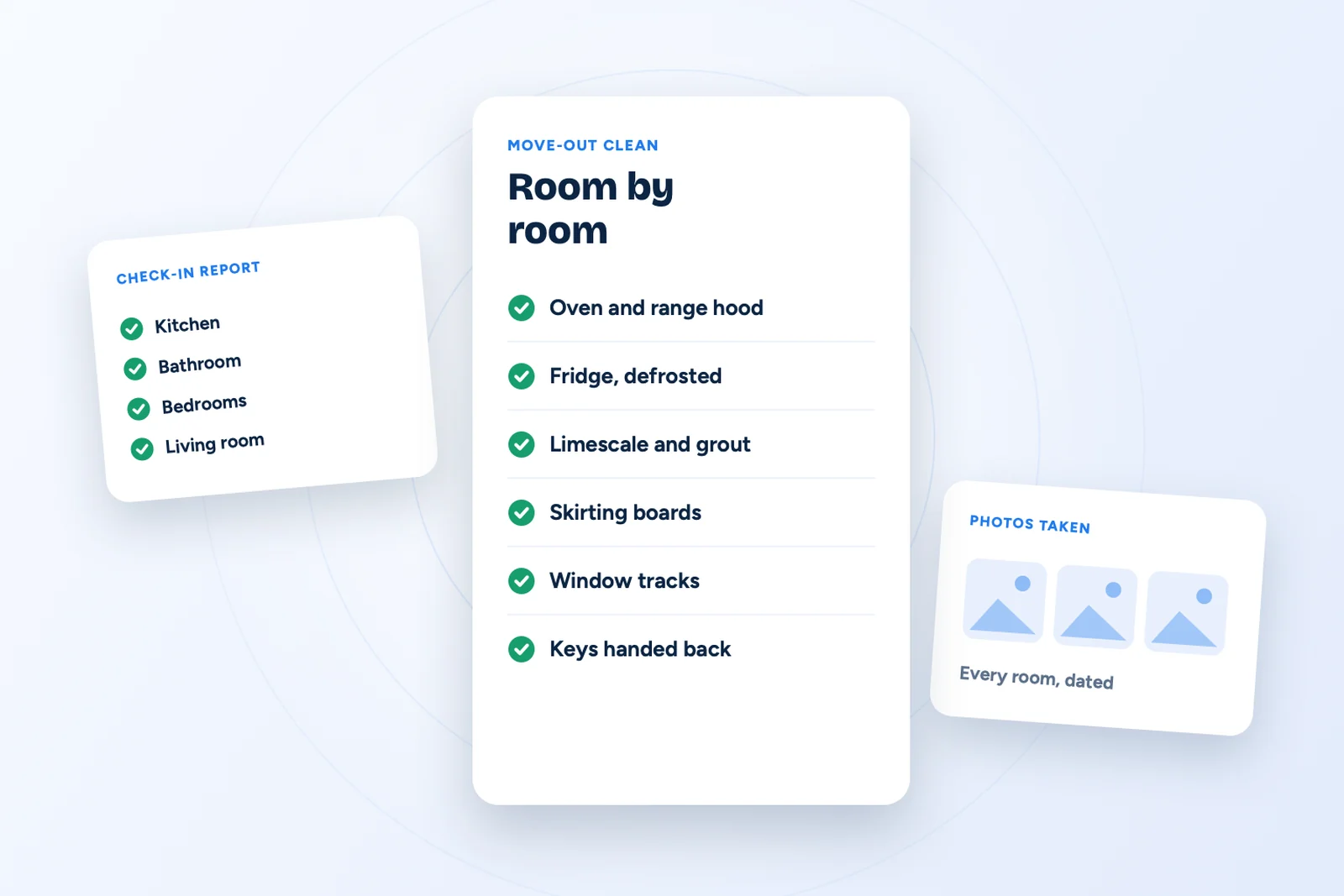
When the clean is finished, photograph every room from the doorway and every item on this list, with the date, before you hand back the keys. Keep receipts for any professional cleaning. Those photographs and receipts are what settle a deposit dispute weeks later.
The rules on deposits differ by country and state. In the US, each state sets how long a landlord has to return a deposit or itemize deductions. In the UK, deposits for most private tenancies must be protected in a government-approved scheme, and the schemes run free dispute services. In Ireland, the Residential Tenancies Board hears deposit disputes. In Australia, bonds are usually lodged with a state or territory bond authority, and disputes go to the local tribunal. In New Zealand, bonds are lodged with Tenancy Services, and disputes go to the Tenancy Tribunal. In Canada the rules are provincial, and in Ontario landlords cannot take a damage deposit at all. If a deduction looks unfair, those are the places to take it.
Need this done?
Describe the job once and contractors near you get in touch. It costs you nothing.