How to Get More Contractor Jobs Without Paying Commission
How to get more jobs without paying commission: referrals, reviews, local search, fast replies, and what each kind of lead site really costs you.
Every contractor knows the pattern: a quiet week, then three calls on the same morning. Steady work comes from a handful of habits more than from any single platform, and most of those habits cost nothing. This guide is about how to get more jobs without paying commission: where customers actually come from, what each paid source really costs you, and how to turn one good job into the next three.
It is written for tradespeople and small crews in the United States, Canada, the UK, Ireland, Australia and New Zealand, whether you are a plumber, an electrician, a cleaner, a mover or a handyman. The principles are the same everywhere. Only the lead sites and the licensing bodies change.
Where contractor work really comes from
Ask an established tradesperson where their jobs come from and the answer is usually the same list: past customers calling again, referrals from those customers, other trades passing work along, people who found them in a local search, and a share from platforms and lead sites. The first four are cheap or free. The last one costs money, and the way it costs money matters.
The aim is not to avoid paid sources. It is to keep the free ones working hard, so that paid work tops up a full diary instead of being the only thing in it. A contractor who depends on one lead site has handed that site their pricing power.
Know what each lead source costs you
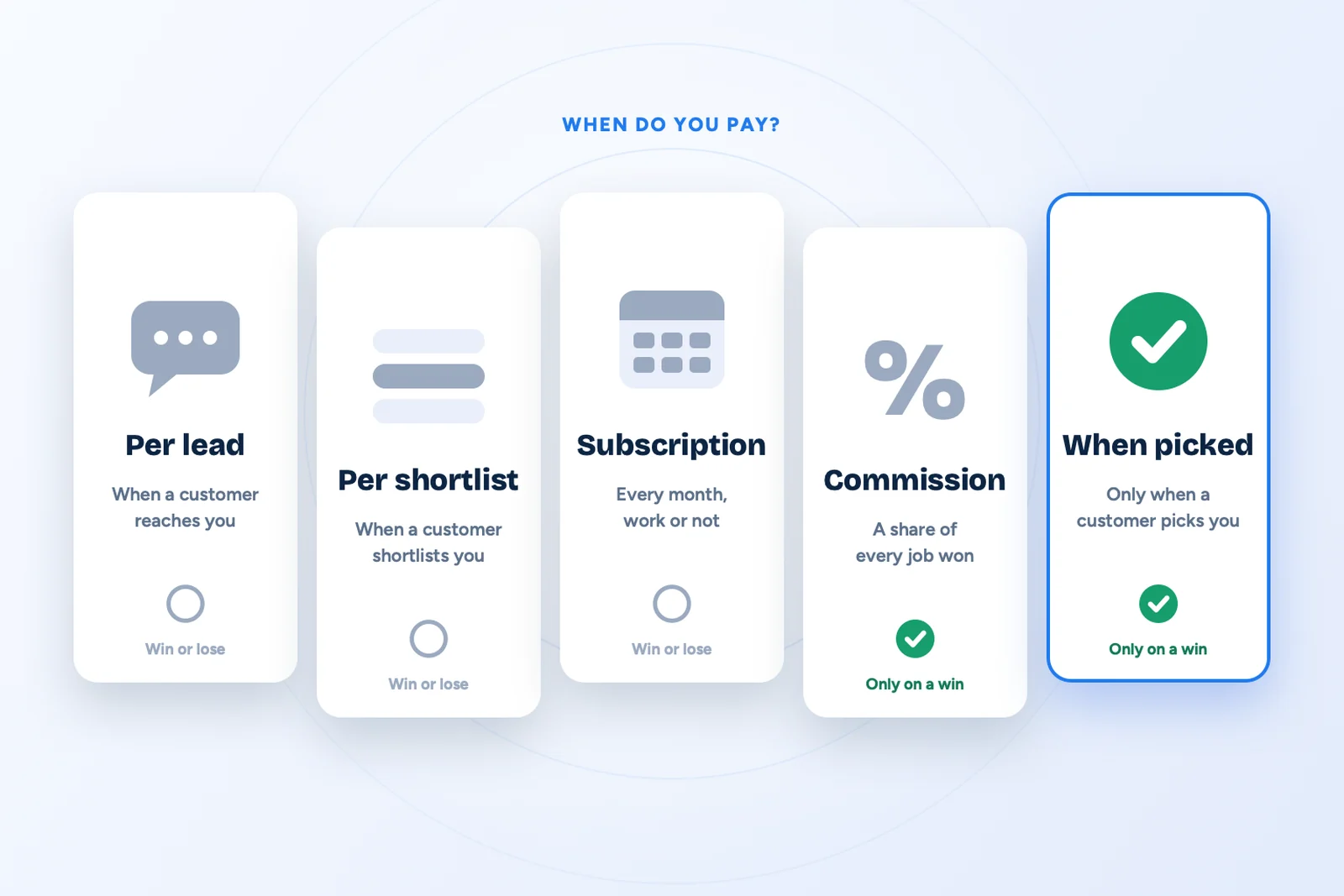
Paid sources charge in five main ways: per lead, per shortlist, by subscription or membership, by commission on the job, or only when a customer picks you. The real difference is who carries the risk. When you pay per lead, you pay for the chance to quote, whether or not you win. With commission you pay only on work you win, but you pay a share of every invoice. A subscription is a fixed cost, cheap in a busy month and expensive in a quiet one.
The only number that settles it is the cost of each job you actually win. Add up what a source cost you over two or three months, count the jobs it produced, and divide. We compare the models in detail in pay per lead vs subscription, and look at the best-known sites country by country in Angi and Thumbtack alternatives for contractors.
Make every finished job bring the next one
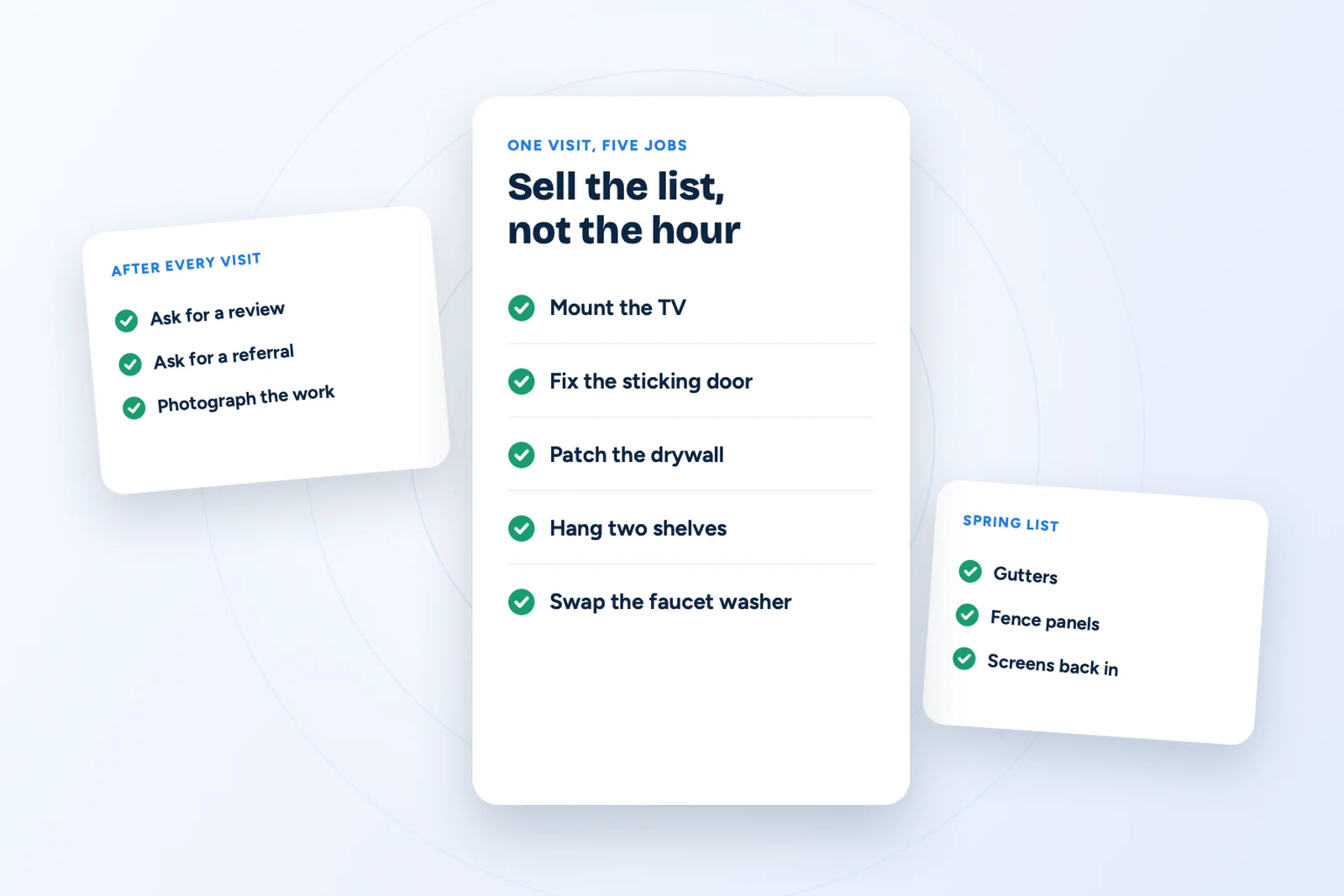
The cheapest job you will ever get is the one a happy customer sends you, so make it easy for them. At the end of every job, walk the customer through what you did, leave the paperwork tidy, and ask two things: would they leave a review, and do they know anyone else who needs the same kind of work.
Ask on the day, while the result is in front of them, and send the review link that evening. Plenty of customers who mean to write a review never do until they are reminded. Photograph the finished work every time, with the customer's permission, because photographs of real jobs are the evidence your next customer is looking for.
Keep a simple list of past customers and what you did for them. A message when a water heater is due for a service, or before winter for gutters and outside faucets, brings back work you have already earned.
Build a profile customers can check
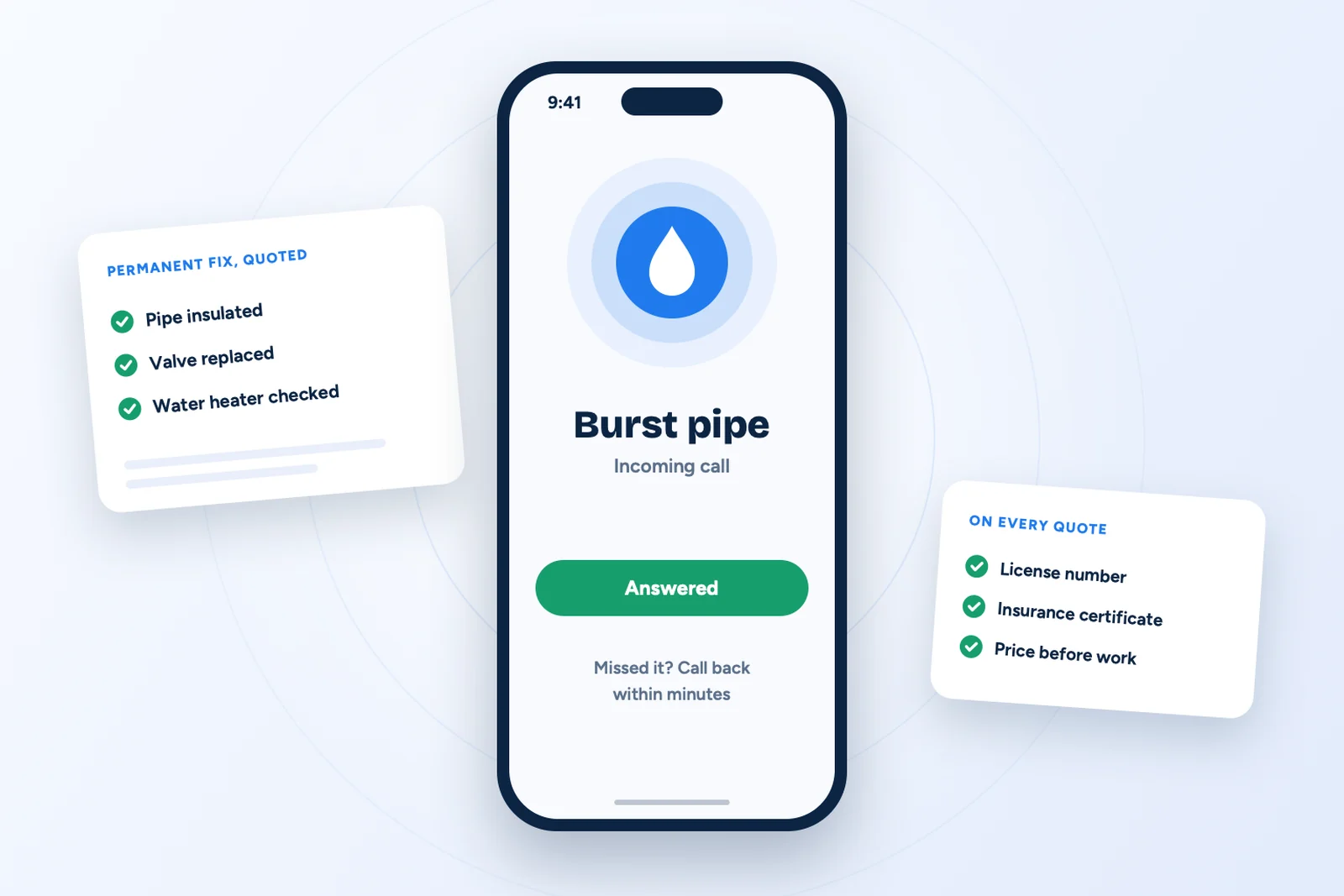
Customers compare contractors on evidence, so give them some. That means a clear list of the trades you do and the places you cover, your license or registration number where your work needs one, a current insurance certificate you are happy to send, photographs of finished jobs that look like the work people search for, and reviews from real customers.
Say what you do not do, too. "No gas work" or "jobs of a day or more only" saves you from calls you would turn down, and customers read it as honesty. Write your bio last and keep it about the work: how you approach a job, how you keep a home clean, and how you handle a problem you find halfway through.
Verification helps when customers know what it means. Where a platform offers identity and business checks, finish them early and learn what the badge covers, so you can explain it when asked. On Taskovery, the verified tick means a photo ID plus a business or address check has passed, and a trade license is a separate badge you can add.
How to get more customers as a contractor online
Most customers now start with a search on their phone, and local results lean on map listings more than on websites. Claim your free Google Business Profile and fill it in completely: trades, service areas, hours, photographs, and a phone number you actually answer. Do the same on Bing Places and Apple Business Connect, which feed the maps on other devices. Use exactly the same business name, phone number and area everywhere, because mismatched details confuse search engines and customers alike.
Ask your happiest customers to review you there as well as on any platform you use. A website helps if it is simple: what you do, where you work, photographs, reviews and a way to call. It does not need to be expensive to do its job.
Answer fast, and answer well
Speed wins more work than price. The contractor who replies within the hour with a clear answer is often hired before the others have read the message. Turn on notifications for the sources you use, and block out time in your day to reply instead of leaving everything until the evening.
A good first reply does three things: says who you are, explains how you would approach the job, and says when you could start. If the customer asked for a price, give a range and what would move it, and label it as an estimate. Ask one or two questions that show you read the job properly. Replies pasted from a template are easy to spot and easy to ignore.
Follow up every quote
Most quotes are never followed up, which is why following up works. A short message two or three days after you send a price, asking whether the customer has any questions, wins jobs that would otherwise drift to whoever called last. Keep it brief and useful: offer to walk them through the options, or to adjust the scope to fit a budget.
If they chose someone else, thank them and ask what tipped the decision. The answer is free market research, and a polite reply is often remembered the next time something breaks.
Make it easy to hire you
Small frictions lose jobs. Answer your phone or call back the same day, confirm appointments the day before, arrive inside the window you gave, and text if you are running late. Take the payment methods your customers expect, and send a clear invoice promptly. None of it is marketing, and all of it is why customers call the same person again.
Be the contractor who explains things. A customer who understands why the job costs what it does, and what you found behind the wall, trusts you with the next one and tells their neighbor about you.
Price the job, not the platform
When a lead source charges you, it is tempting to build the fee into your price. Resist it where you can. Customers compare quotes, and a price padded to cover a platform's cut loses to the contractor who did not have one.
Know your real hourly cost, including travel, tools, insurance, the vehicle and admin time, and price from that. Quote in writing, say what is included and what is not, and explain how you handle changes. A clear written quote wins more often than a lower number that leaves the customer guessing.
Choose your jobs on purpose
More jobs is not always the goal. The right jobs are. Work out which trades, areas and job sizes pay you best once travel and time are counted, and set your preferences on every platform to match. A small job forty minutes away can cost you the whole afternoon.
The details differ by trade: see how to get more handyman jobs and how to get more plumbing customers.
Say no quickly and politely to work that does not fit, and point the customer to someone who does it if you can. Customers remember that, and so do the trades you send work to.
Use the slow weeks well
Quiet weeks come to everyone. Use them for the work that brings in the next busy spell: update your photographs and profiles, ask recent customers who have not yet left a review, follow up old quotes, and get in touch with property managers, landlords and real estate agents, who need reliable trades all year round.
It is also the time to check your paperwork. Renew anything close to expiring, such as a license, an insurance policy or a registration, before a customer asks for it and finds it out of date.
Handle reviews like a professional
Every contractor gets a bad review eventually. Reply once, calmly and in public: thank the customer, set out the facts without arguing, and say what you did or offered to put it right. Future customers read the reply more closely than the complaint.
Never pay for reviews, offer a discount only for good ones, or write your own. Platforms remove them, and fake reviews are now illegal in the US and the UK. Ask every customer, not only the happy ones, and let a steady stream of honest reviews do the work.
Work with other trades
Other contractors are one of the best sources of work you can have. An electrician finishing a kitchen knows who needs a plasterer, and a plumber fitting a bathroom knows who needs a tiler. Build a short list of reliable people in neighboring trades, send them good work, and they will send it back.
Keep it simple and fair: agree how you hand over a customer, make sure everyone is properly licensed and insured for their part, and never recommend someone you would not let into your own home. On Taskovery, the Trade room is a forum where contractors ask each other about pricing, paperwork and parts, and customers never see it.
Where Taskovery fits
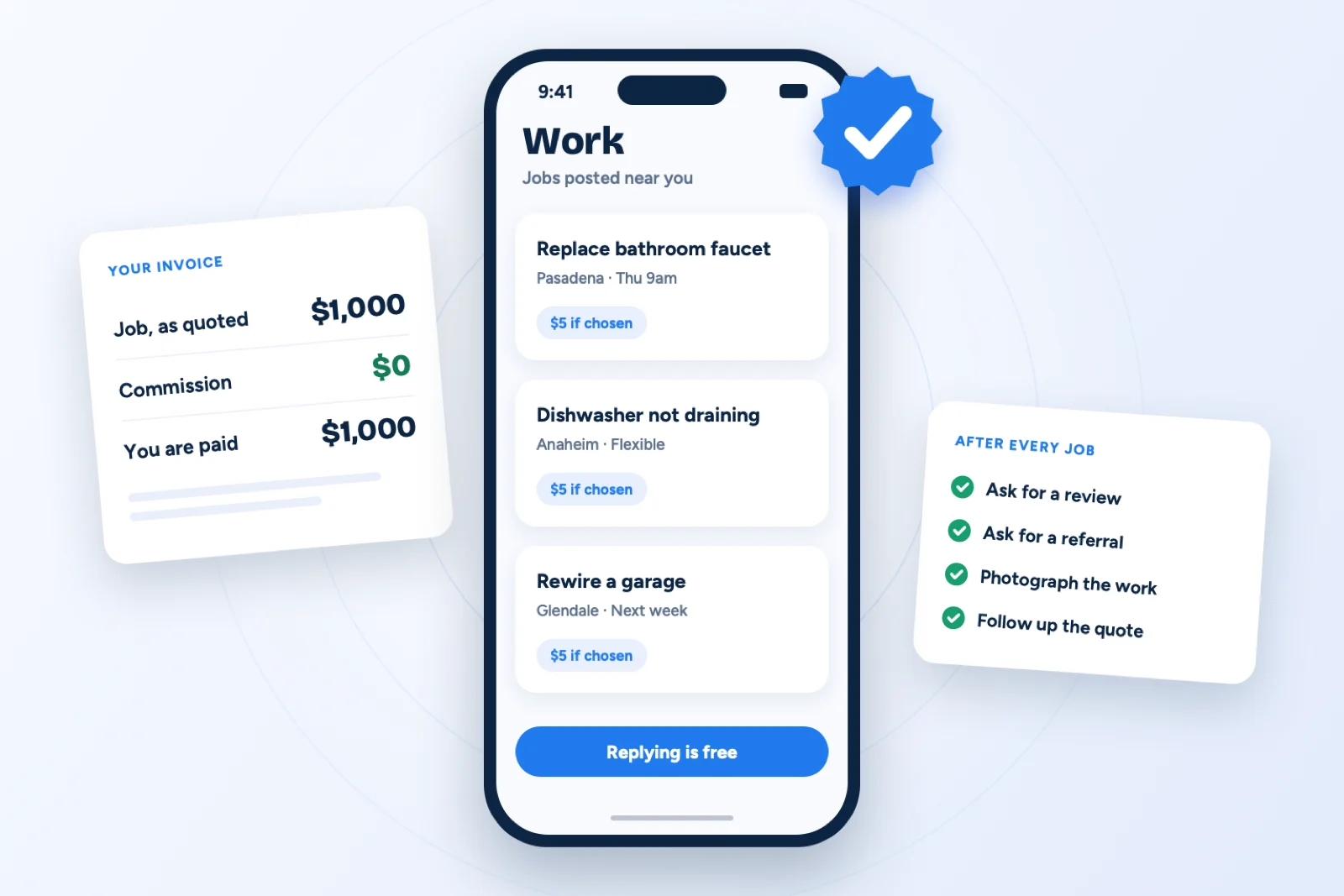
Taskovery is free to join, with no commission on your work. On the Free plan you reply to the jobs customers post in your trades and area and take calls from an available number on your profile in the app, and you pay a flat hire fee only when a customer chooses you: 5 for any job posted before 1 January 2027, then 9 for a small job, 29 for a medium one and 59 for a large one, in your service country’s currency, shown on the job before you reply. Chatting with customers while they decide is free. Pro, at 149 a month, has no hire fees and adds direct introductions from our team, personal partner support and a Featured partner badge. You agree your price with the customer and invoice them directly. Compare the plans.
There is no contract on either plan. On Pro, your first customer comes within 14 days of your first Pro payment, or that payment is refunded in full. See Taskovery Partner plans for the details.
A checklist for a fuller diary
- Ask for a review and a referral at the end of every job
- Photograph finished work, with the customer's permission
- Claim and complete your free map listings
- Keep your license, insurance and service areas current on every profile
- Reply within the hour: who you are, your approach, and when you can start
- Work out the cost per won job for every paid source
- Build a short list of trades you pass work to
- Get back in touch with past customers when a service is due
None of it is complicated, and none of it works in a week. Do it for a season and the quiet weeks get shorter, whichever lead sources you keep.
Need this done?
Describe the job once and contractors near you get in touch. It costs you nothing.