How to Get More Plumbing Customers
How to get more plumbing customers: answer urgent calls, turn emergencies into regulars, win planned work, and judge lead sites by cost per job.
Plumbing has a built-in advantage: nobody can put off a burst pipe. The flip side is that emergency customers call whoever answers first, and forget them just as fast. The plumbers who stay busy all year turn those urgent calls into regular customers, and fill the quiet weeks with planned work. Learning how to get more plumbing customers is mostly about doing both on purpose.
This guide covers being reachable, getting found for urgent searches, turning emergencies into repeat work, the planned jobs worth chasing, and how to judge the lead sources you pay for. The broader habits are in our guide to getting more jobs without commission.
Be the plumber who answers
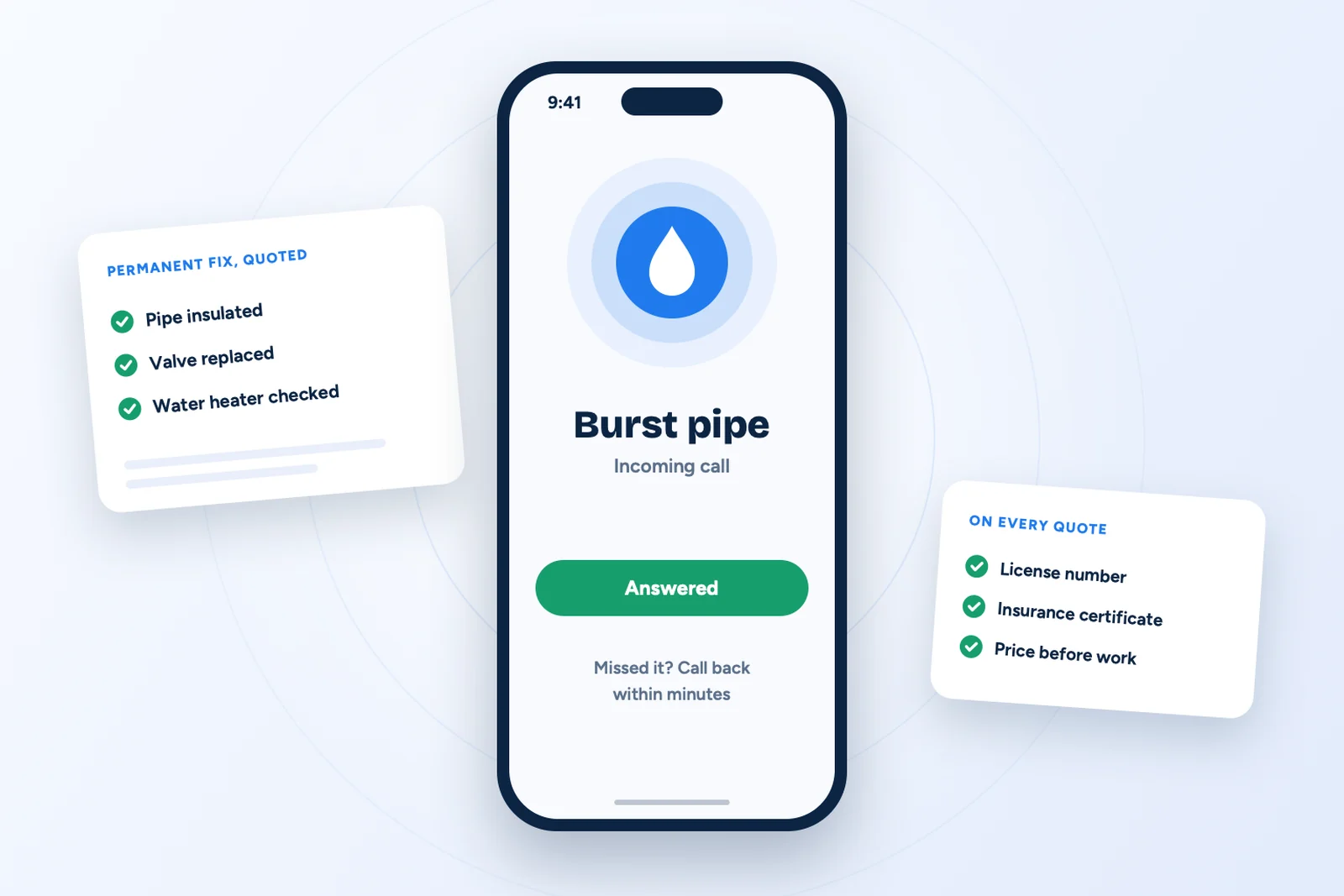
In an emergency, the customer calls down the list until someone picks up. Being that someone is worth more than any advertising. If you cannot answer on the tools, return missed calls within minutes, or use a voicemail message that says when you will call back and what to do in the meantime, such as where to find the main shut-off valve.
Say your hours and your after-hours policy clearly. A customer who knows you do not take night calls will still call you in the morning. One who gets no answer at all will not call again.
Get found for urgent searches
Urgent customers search on their phones, and the map results come first. Claim and complete your free Google Business Profile, with your service area, hours, photographs and the specific jobs you do: burst pipes, blocked drains, water heater repair, leak detection. Keep your name, number and area the same everywhere you are listed.
Ask every emergency customer for a review once the job is done and they have calmed down. Reviews that mention speed and a clear price are exactly what the next panicked customer reads.
Turn emergencies into regular customers
An emergency visit is an introduction. Fix the problem, then tell the customer what caused it and what would stop it happening again: the uninsulated pipe, the aging water heater, the corroded valve. Quote the permanent fix in writing. Many will book it, and you will be the plumber they call next time.
Leave your details somewhere they will be found: on the water heater, under the sink, or on a sticker by the main shut-off valve. Label the valve while you are there. It is a small kindness that customers remember.
Water heaters, fixtures and planned work
Planned work fills the gaps between emergencies and is easier to schedule. Water heater replacements, fixture upgrades, bathroom refits, outdoor faucets before winter, and re-piping in older homes are all jobs customers research ahead of time. Show them on your profile with photographs, and say what a typical job involves.
Offer a maintenance visit for the systems that need one, such as flushing a water heater or checking a backflow device where that is required. Customers who book an annual check become customers for everything else.
Builders, remodelers and property managers
General contractors and remodelers need reliable plumbers for every kitchen and bathroom they build, and they value turning up on the day more than the lowest price. Property managers and landlords need someone who can respond to tenants quickly and invoice per unit. A few of these relationships can keep a small business steady all year.
Be clear about your availability and response times, keep their tenants informed, and send tidy invoices with photographs of the work. That is what gets you on the short list they call first.
Show your license and insurance up front
Customers are more likely to check a plumber than a painter, because the work is hidden and the stakes are high. Put your license or registration number on your profile, your quotes and your invoices, and have a current certificate of insurance ready to send.
The rules differ by country. In most US states and Canadian provinces, plumbing is licensed work. In Australia it is licensed in every state and territory. In New Zealand, plumbers are licensed by the Plumbers, Gasfitters and Drainlayers Board, and customers can check the public register. In the UK and Ireland plumbing itself is not licensed, but gas work needs Gas Safe registration in the UK or a Registered Gas Installer in Ireland, and UK plumbers can join the WaterSafe register of approved plumbers.
Price your call-outs clearly
Emergency pricing confuses and worries customers: call-out fees, after-hours rates, minimum charges, parts. Publish how you charge, even if not the numbers, and explain it on the phone before you set off. "There is a call-out fee, then an hourly rate, and I will give you a price before I start the repair" is enough to win trust.
Agree the two-visit pattern out loud when it applies: make it safe tonight, fix it properly tomorrow at the normal rate. Customers are grateful for the saving, and it avoids a dispute over the bill.
Work with other trades
Other trades send plumbers a lot of work. Electricians, tilers, kitchen fitters and handymen all meet plumbing problems they cannot fix. Build a short list of reliable people in those trades, send them the jobs you do not do, and ask them to do the same for you.
Insurance restoration and water damage companies are another source: after a leak they need the plumbing fixed before they can dry and repair. Be the plumber who turns up when they say and reports back clearly, and they will call you again.
Whatever the source, every quote you send should cover the same ground:
- Your business name, contact details and license or registration number
- What you found, and what you propose to do about it
- The parts, named, and whether they are included in the price
- The price, and whether it is fixed or depends on what you find
- When you can start, and how long it will take
- The warranty on your labor and on the parts
Choose lead sources by cost per job
Lead sites can bring a steady flow of urgent work, but plumbing leads are often among the more expensive, and paying per lead for jobs you do not win adds up quickly. Track every source for two or three months: what it cost, how many jobs it produced, and what those jobs were worth. Our comparison of pay per lead vs subscription shows how to work out the real cost of a won job.
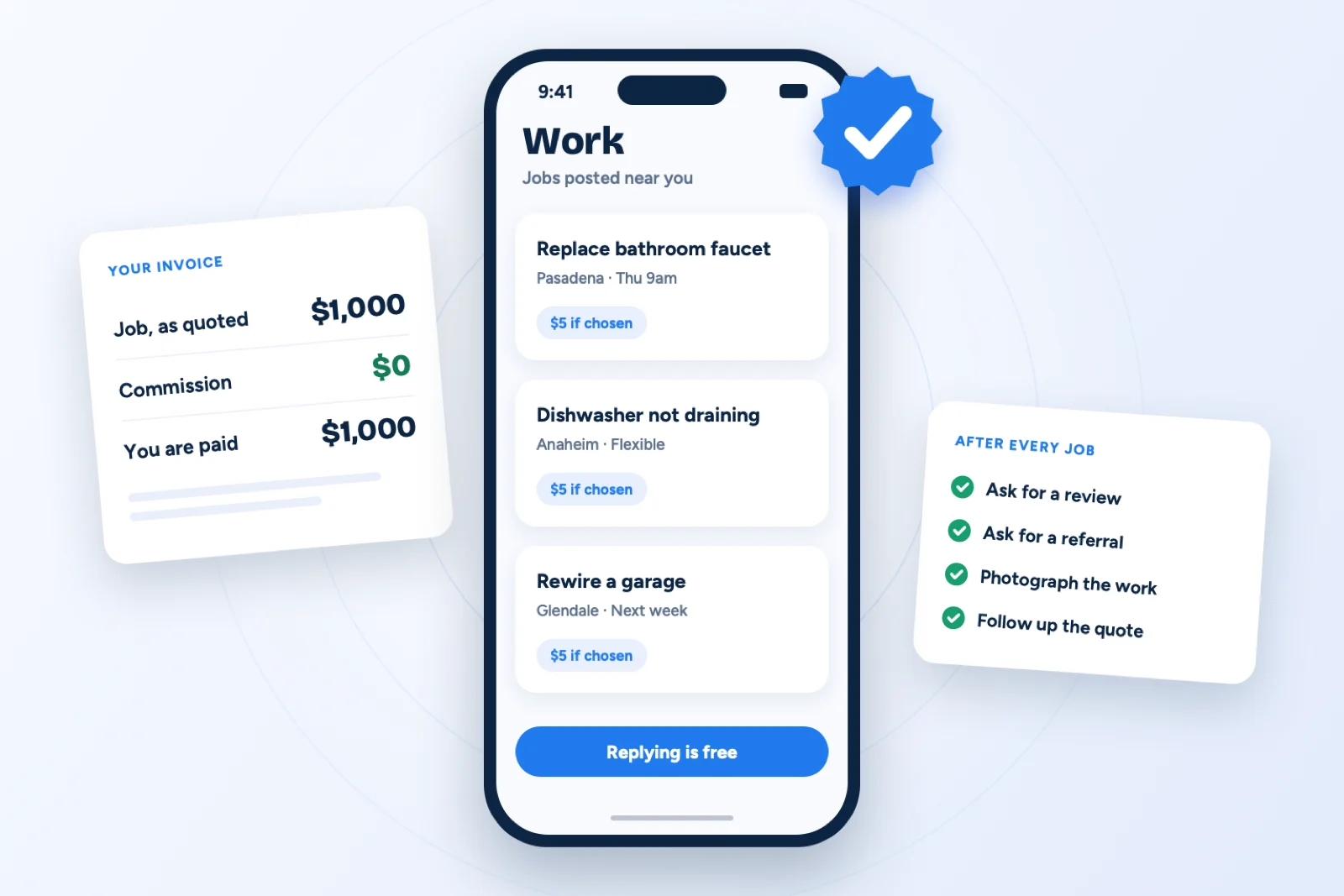
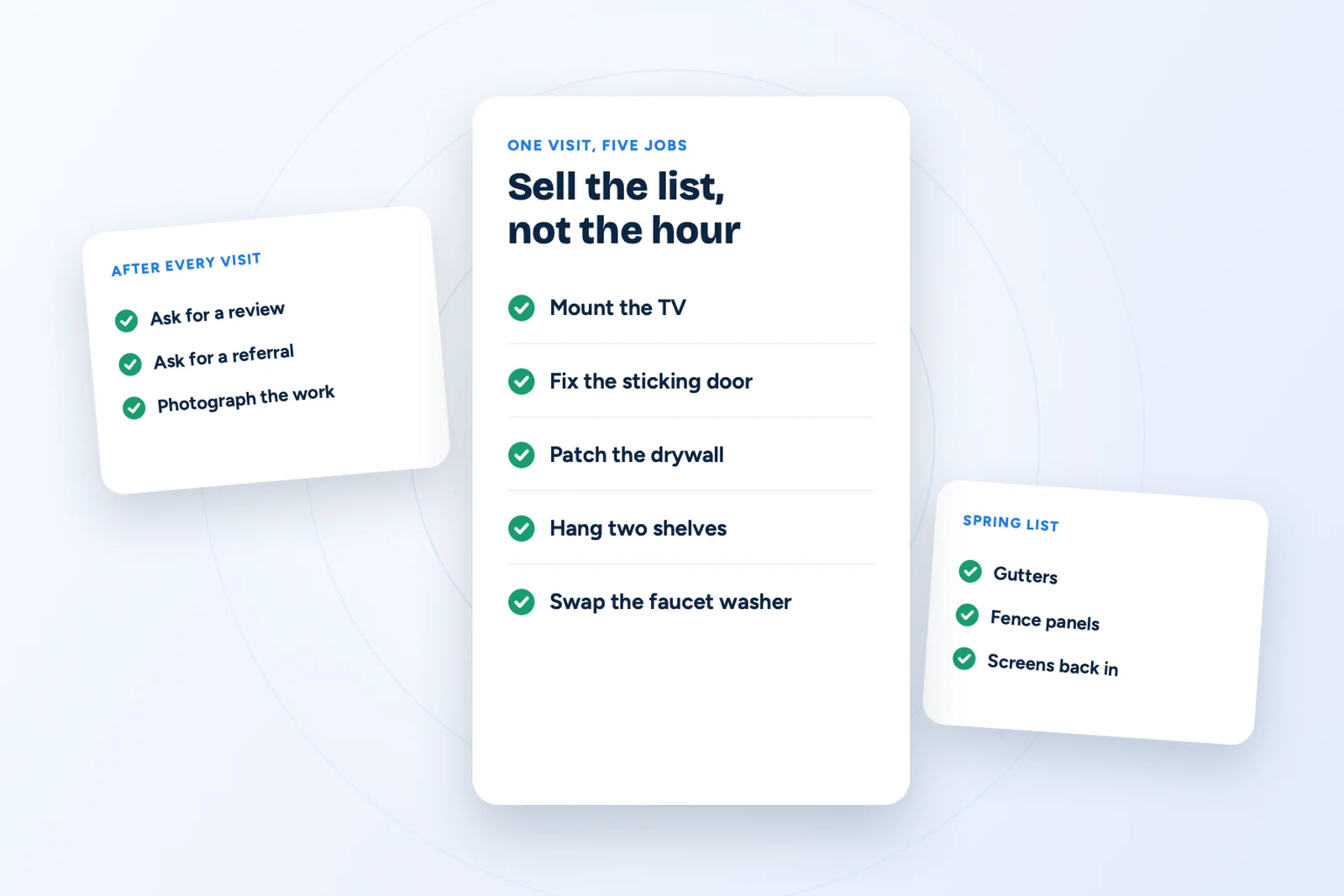
On Taskovery, answering a job is free and a flat hire fee applies only when a customer chooses you, with no commission on the work. For the smaller jobs that come with most plumbing visits, see how handyman jobs are won with a list rather than a single task.
Need this done?
Describe the job once and contractors near you get in touch. It costs you nothing.