How to Get More Handyman Jobs in Your Area
How to get more handyman jobs: sell the list, not the hour, win property managers and agents, set a minimum visit, and turn each job into the next.
Handyman work has a particular problem: the jobs are small, the travel is not, and a morning with one twenty-minute task in it barely pays for the fuel. The handymen who stay busy and profitable have usually solved that problem first. Learning how to get more handyman jobs is less about finding more customers than about getting fuller visits, repeat work and the kind of customer who has a list rather than a single job.
This guide covers how to price and sell a visit, which customers bring steady work, how to show what you do, and where the licensing line sits in each country. For the wider picture, including what each kind of lead site really costs, see our guide to winning work without commission.
Sell the list, not the hour
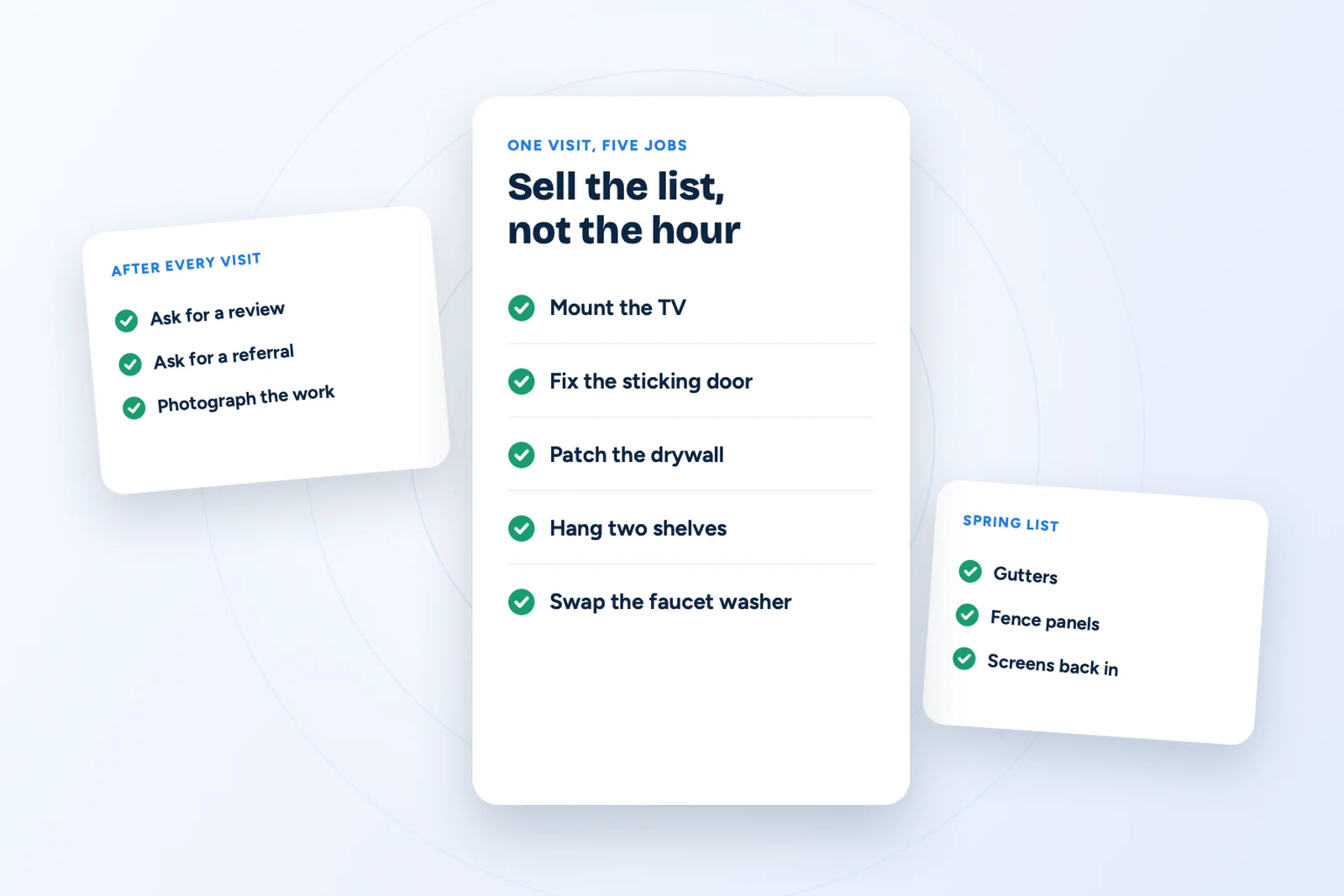
Customers rarely have one small job. They have one they remember and six they have stopped seeing. Ask every customer, when they book, whether there is anything else on the list: the door that sticks, the smoke alarm, the loose rail, the gutter. A two-hour visit with five jobs in it is worth far more to both of you than a single call-out.
Make it easy to say yes. Suggest customers keep a running note on their phone, send a photo of each job before the visit, and have the parts they want fitted on site. The work goes faster, you quote more accurately, and nobody pays for a trip to the hardware store.
Set a minimum visit, and say so
A minimum charge, usually an hour or two, protects you from the visit that costs more to reach than it earns. State it upfront on your profile and in your first reply, and frame it as value: "My minimum is an hour, so it is worth adding anything else you have been meaning to fix."
Offer a half-day or full-day rate for long lists. It suits customers who have saved jobs up, it fills your calendar in useful blocks, and it removes the awkward clock-watching of an hourly rate. Be clear about what happens when a task turns out bigger than it looked: stop, explain, price it, then carry on.
Property managers, landlords and agents
The customers with the longest lists are the ones who manage more than one home. Property managers need turnarounds between tenants: patching, painting, re-hanging doors, replacing fittings, and a punch list signed off in one visit. Landlords with a few units need someone reliable who knows the buildings. Real estate agents need small repairs done fast before a listing or after an inspection.
Introduce yourself to a few of them with a short note: what you do, the area you cover, how quickly you can turn a unit around, and that you invoice per property. Then be reliable the first three times, because that is how you become the name they call without thinking.
Show the jobs people search for
Customers search for the job, not for "handyman": TV mounting, furniture assembly, door repair, drywall patching, fence repair. List those services by name on every profile you have, and add photographs of finished work for each, with the customer's permission. A photo of a neatly mounted TV with no visible cables sells the next one.
Keep your service area specific. Name the towns or neighborhoods you actually cover. A profile that says "everywhere" tells a customer nothing, and it attracts jobs forty minutes away that cost you the afternoon.
Answer fast and quote clearly
Small-job customers decide quickly. The handyman who replies within the hour, confirms they can do every item on the list, and gives a clear price or rate usually gets the booking. Reply with three things: who you are, how you would handle the list, and when you could come.
Quote in writing, even for small jobs: the tasks, the rate or price, the minimum, who buys the parts, and what happens if something turns out bigger. A clear quote saves a conversation at the end of the visit, when nobody wants one.
A profile that wins small jobs usually has:
- The specific services customers search for, listed by name
- Photographs of finished work for each of them
- The towns or neighborhoods you actually cover
- Your minimum visit, and your half-day and day rates
- What you do not do, such as gas or new circuits
- Reviews from real jobs, and your replies to them
Know your licensing line
Most handyman work is unlicensed, but the line matters, and customers increasingly check it. In much of the US, states set a dollar limit for work done without a contractor license, counting labor and materials together, and gas and electrical work are licensed whatever the price. In Canada, the UK, Ireland, Australia and New Zealand, gas work needs a registered or licensed gasfitter, and electrical work on fixed wiring is licensed or closely controlled.
Say clearly on your profile what you do not do, such as gas, new circuits or anything that needs a permit. Customers read that as honesty, and it saves you from calls you would turn down. Keep a short list of licensed trades you trust, and pass that work on.
Reviews and referrals from small jobs
Small jobs are the best source of reviews there is, because there are so many of them. Ask every customer at the end of the visit, and send the link that evening. Ask for a referral at the same time: most people know a neighbor, a parent or a friend with the same list.
Leave something behind: a card or a magnet with your name and number, stuck to the fridge or left in the kitchen drawer. The next time a door sticks, it is the first thing they see.
Seasonal work and repeat visits
Handyman demand follows the seasons: gutters and exterior checks in spring and fall, fences and decks in summer, draughts and sticking doors in winter. Message past customers at the start of each season with the jobs that usually come up. A short, useful reminder brings back work you have already earned.
Offer a twice-yearly visit to regulars: one booking in spring, one in fall, with a list you build together. It gives them a home that stays ahead of its own repairs, and it gives you a calendar that fills itself.
Where to find the first customers
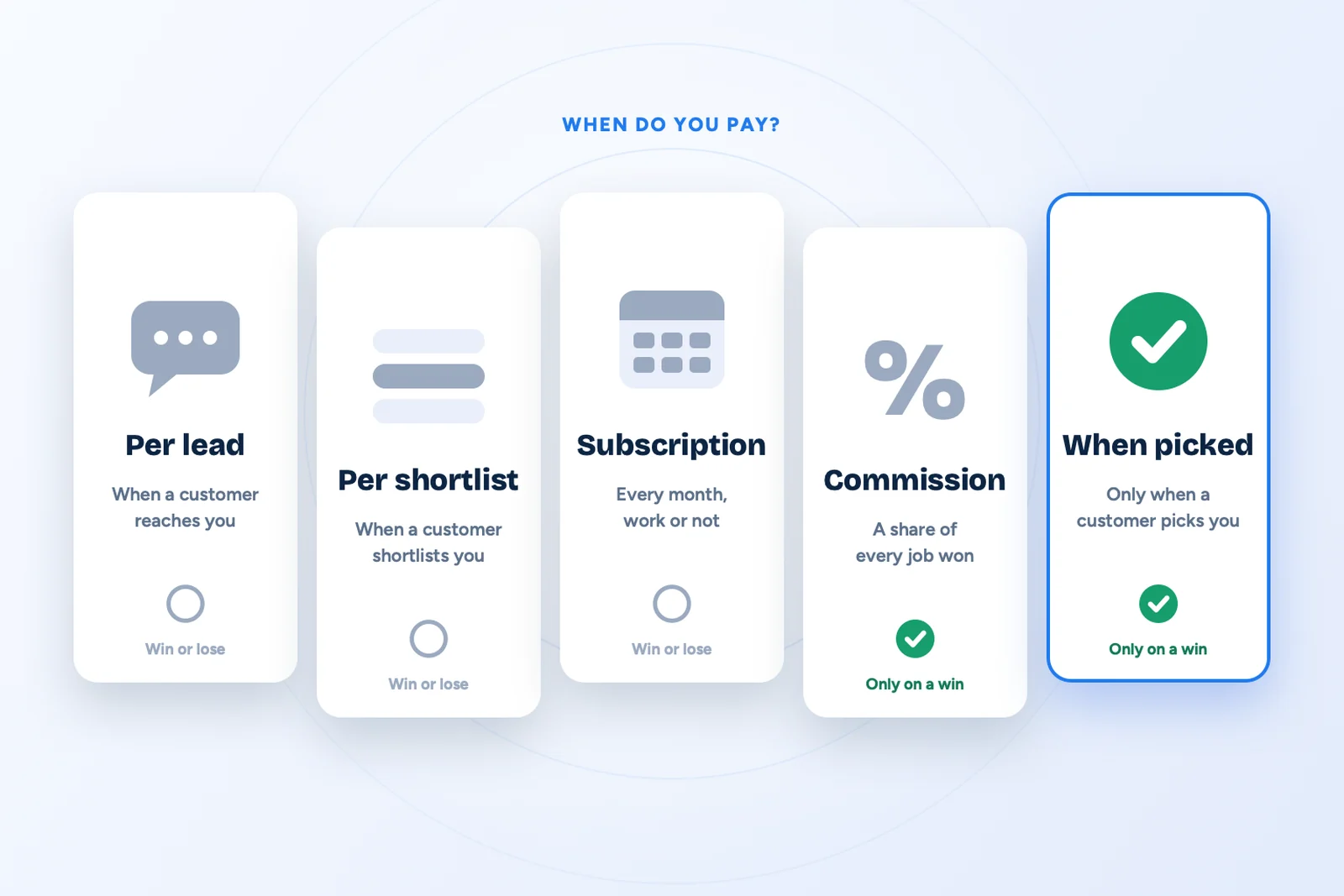
Start with the free channels: a complete Google Business Profile, a listing on the maps other phones use, and word of mouth from every job. Then add a platform or two to fill the gaps, and judge each one by what a won job costs you. Our guide to what leads cost shows how to work that out.
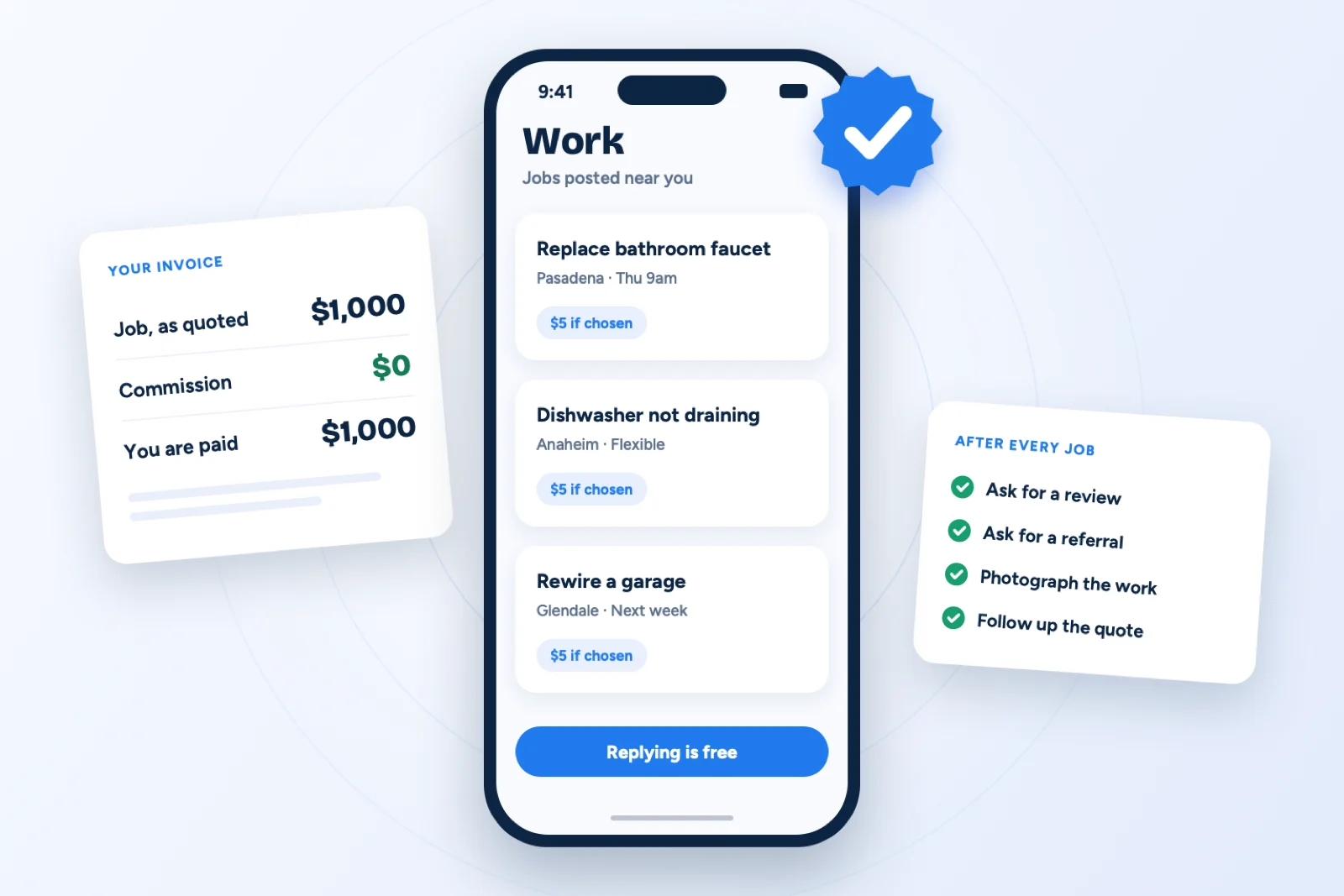
On Taskovery, customers post jobs for free and contractors who cover that trade and area can answer. Answering is free, a flat hire fee (5 until 1 January 2027, then 9 to 59 by job size) applies only when a customer chooses you, and there is no commission. Plumbers can use the same playbook for plumbers, which covers the urgent end of the work.
Need this done?
Describe the job once and contractors near you get in touch. It costs you nothing.