Angi and Thumbtack Alternatives in 2026: Fees Compared
Angi and Thumbtack alternatives for contractors: how other lead sites charge in the US, UK, Ireland, Australia and New Zealand, and what to check first.
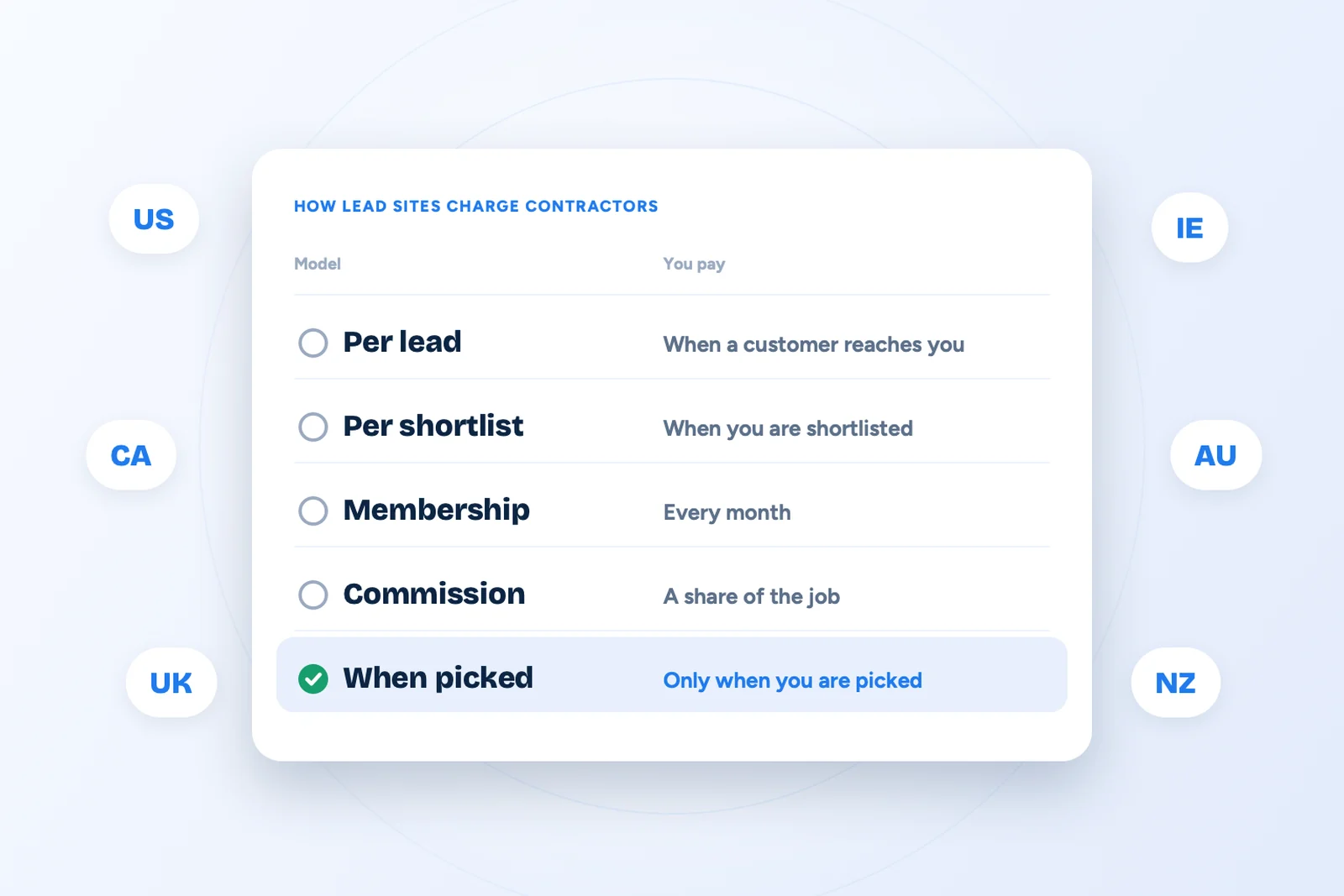
Angi and Thumbtack are the two names most US contractors try first, and the two they most often ask about replacing. The complaints are familiar: paying for leads that go nowhere, competing with several other pros for the same customer, and a monthly cost that is hard to predict. Looking for Angi and Thumbtack alternatives is really looking for a different way to pay for work.
This guide explains how Angi and Thumbtack charge, then looks at what contractors use instead in the US and Canada, the UK and Ireland, and Australia and New Zealand. Each site is described from its own help pages and terms as they read in September 2026. Prices and policies change, so check the current terms before you join anything, and see more jobs, no commission for the habits that matter more than any one site.
How Angi and Thumbtack charge
Thumbtack is pay per lead. Its help pages say pros pay for leads, meaning new customers who reach out to them directly, and that each pro sets their own lead prices. For its open opportunities, a pro reaches out first and pays the price shown only if the customer responds.
Angi's terms for pros say pros pay for leads per lead, as part of a bundle, or through a subscription, which is an automatically renewing, fixed-term commitment that pre-pays for leads at a discount. The same terms say leads are not guaranteed jobs and that a lead is frequently sent to several other pros.
Neither model is unfair in itself. Both mean you pay for the chance to win a job rather than for the job, so your real cost depends on how many of those chances you convert.
What to compare before you switch
Put every site through the same questions. When exactly am I charged? How many other contractors see the same customer? Is there a contract or a fixed term? Can I get credit for a bad lead? Does the site sit in the payment? What does the customer see about me? The answers matter more than the headline price, and our guide to what each lead actually costs shows how to turn them into a cost per won job.
| Site | Where | How it charges contractors |
|---|---|---|
| Thumbtack | US | Per lead, at a price the pro sets |
| Angi | US | Per lead, in bundles, or a fixed-term subscription that pre-pays for leads |
| Google Local Services Ads | Varies by country and trade | Per lead |
| Bark | All six countries | Credits spent to contact a customer |
| MyBuilder | UK | A fee when a homeowner shortlists you |
| Checkatrade | UK | Monthly membership, dearer plans include leads |
| Airtasker | Australia, New Zealand and others | A service fee taken from the task price |
| Builderscrack | New Zealand | A subscription, with tokens used on each connection |
| Taskovery | All six countries | Free to join; a flat fee only when a customer chooses you (5 until 1 January 2027, then 9 to 59), or Pro at 149 a month |
Alternatives in the US and Canada
Google's Local Services Ads can put your business at the top of local search results, and Google's help pages say you pay only for leads related to your business and the services you offer. It is still pay per lead, but the lead is a customer who chose to call or message you from the ad. Availability depends on your country, your trade and your area.
Bark works in both countries and sells credits you spend to contact customers who have posted a request, with the cost shown before you commit. Then there are the free channels: a complete Google Business Profile, Bing Places and Apple Business Connect listing cost nothing, and a steady stream of reviews on them is worth more than most paid sources.
Alternatives in the UK and Ireland
MyBuilder lets tradespeople show interest in jobs for free and charges when a homeowner shortlists them, and its help pages say there are no joining or membership fees. They also say a shortlist does not guarantee contact, a quote or the job.
Checkatrade is a membership directory. Its basic plan, published at £30 plus VAT a month, lists you without supplying leads, and plans that include leads cost more. Bark operates in both the UK and Ireland. In both countries, a registration that customers can check for themselves, such as the Gas Safe Register, Safe Electric or a registered gas installer number, is also one of the best marketing tools you have.
Alternatives in Australia and New Zealand
Airtasker runs in both countries and uses commission. Its Australian help pages say the service fee for Taskers ranges from 12.5% to 20% of the task price, depending on their tier, plus tax, and is charged once you are assigned a task.
In New Zealand, Builderscrack sells subscription plans with a token balance and deducts tokens when a homeowner accepts your request to connect on a job. Bark operates in both countries as well.
Trade associations and local networks
Trade associations and local business groups are an older route to work, and still a good one. Many associations run a find-a-member directory that customers use to check who is qualified, and membership often comes with training, technical help and the credibility of a logo customers recognize. Local groups, from a chamber of commerce to a neighborhood forum, put you in front of people who would rather hire someone a neighbor knows.
None of these charge per lead. They cost a membership fee or your time, and they work best when you turn up, help, and let the work follow.
Before you leave a site you already use
Read your current terms before you cancel. Check the notice period, any fixed term or early cancellation charge, what happens to credits or leads you have already paid for, and whether your reviews and profile stay visible afterwards. Download or screenshot your reviews while you still can, and ask your best customers from that site to review you somewhere you control.
If a site still brings you good work at a fair cost per job, there is no need to leave it at all. The point of an alternative is choice, not loyalty to a new logo.
Channels you own
Every paid site can change its prices or its rules. The work that comes from your own reputation cannot be taken away. Map listings, a simple website, reviews, repeat customers and referrals from other trades are the base of every busy contractor's diary, and they cost time rather than money.
Treat any lead site as a way to fill gaps and meet new customers, then turn those customers into repeat work and referrals of your own. The contractor who does that well needs fewer paid leads every year. For one trade's version of this, see how plumbers win work outside lead sites.
Where Taskovery fits
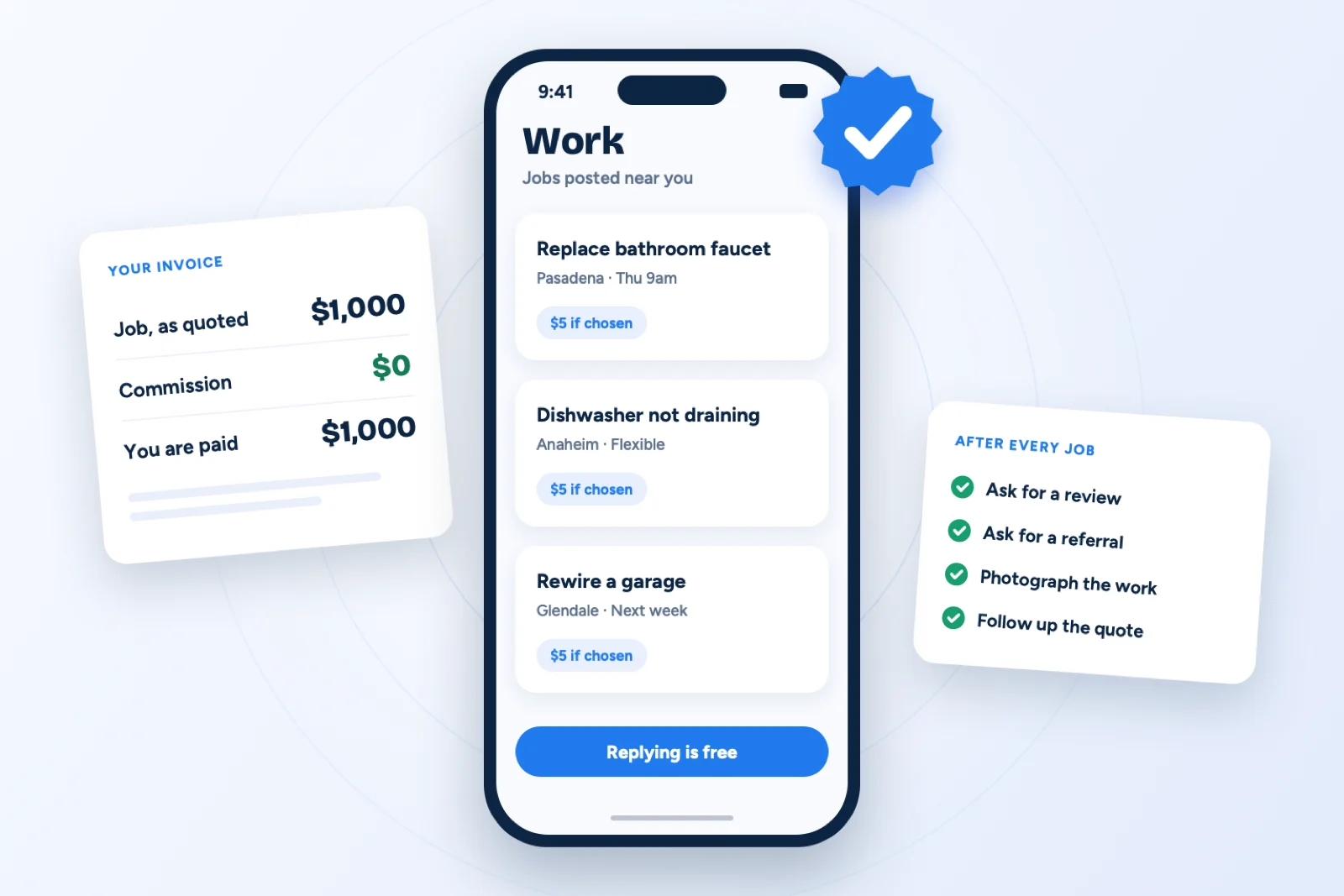
Taskovery is free to join, with no commission on your work. On the Free plan you reply to the jobs customers post in your trades and area and take calls from an available number on your profile in the app, and you pay a flat hire fee only when a customer chooses you: 5 for any job posted before 1 January 2027, then 9 for a small job, 29 for a medium one and 59 for a large one, in your service country’s currency, shown on the job before you reply. Chatting with customers while they decide is free. Pro, at 149 a month, has no hire fees and adds direct introductions from our team, personal partner support and a Featured partner badge. You agree your price with the customer and invoice them directly. Compare the plans.
How to test a new lead source
Try one new source at a time, for two or three months, with a budget you can afford to lose. Record every lead, every quote, every job won and every hour spent. At the end, divide the total cost by the jobs won and compare the result with what your other sources cost you.
Keep the ones that pay for themselves, drop the ones that do not, and put what you save into the free channels that keep working after you stop paying.
Need this done?
Describe the job once and contractors near you get in touch. It costs you nothing.